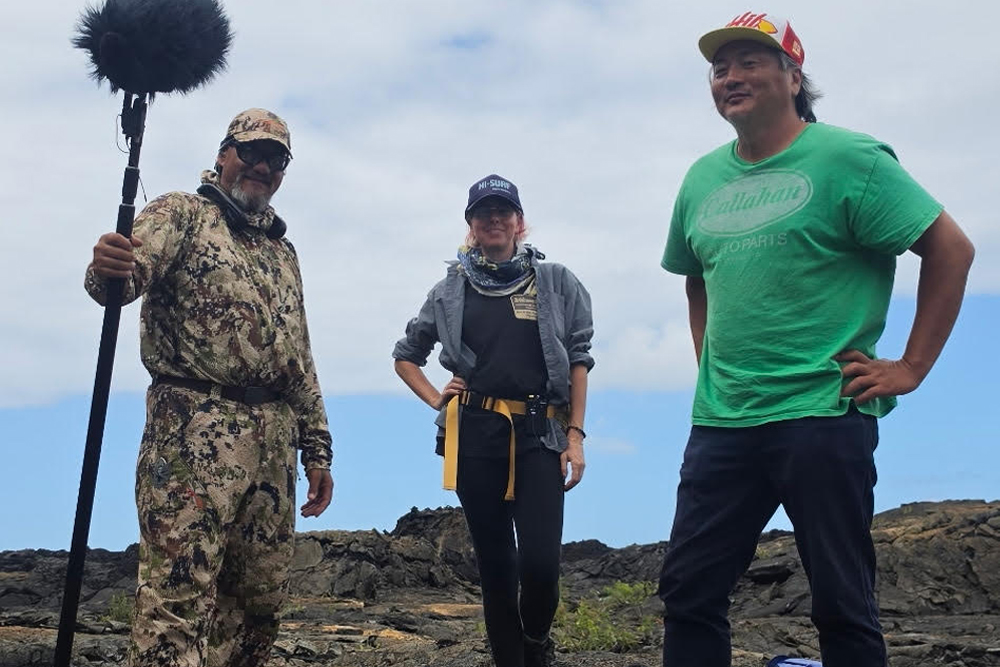
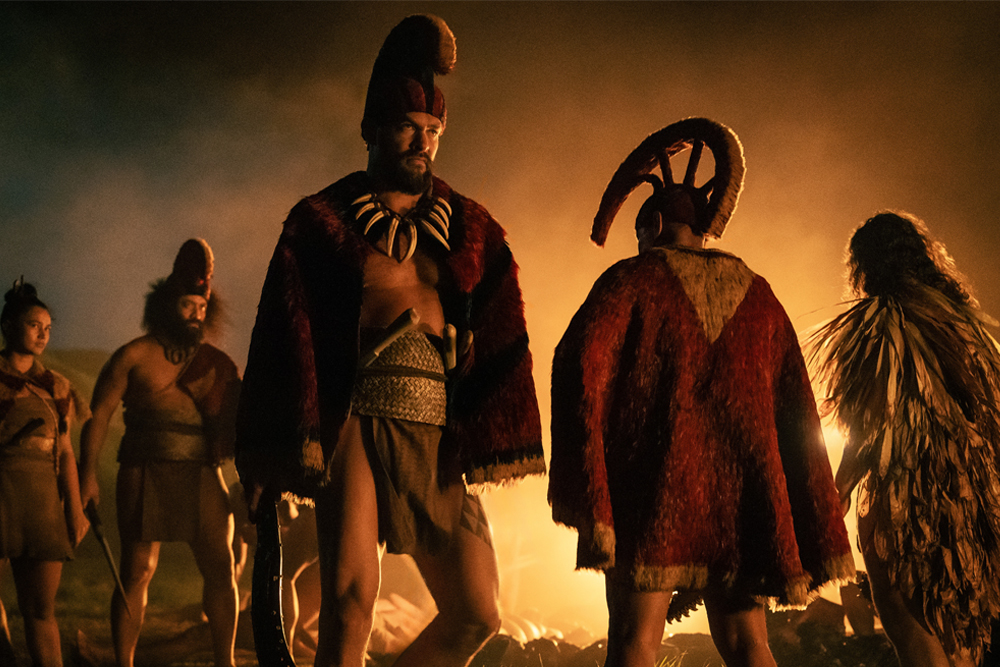
Apple TV’s Chief of War is rooted in history. Co-created by native Hawaiians Thomas Paʻa Sibbet and Jason Momoa, who portrays real-life warrior chief Kaʻiana, the nine episode epic chronicles the warfare, politics, and diplomacy which united the islands during the 18th century. For production sound mixer Tom Visser, who has ties to Hawaiʻi, the project was especially meaningful.
“Jason has done a wonderful thing in helping to bring the rich history of Hawai’i to our public consciousness through the Apple TV platform,” he says. “It is inspiring to see Hawaiians continue to have an emerging voice and are redefining their identity through indigenous stories where they don’t have to be depicted simply as the stereotype promulgated through years of one-sided depictions in film and television… that they are more than the grass skirt hula girls that meet you at the airport, or bring a cocktail at the resort, or play an affable comedic sidekick. Hopefully, projects like Chief of War allow people to respect the identity of Hawaiians and inform their own decisions in how they decide to approach this land and its people.”
Visser’s professional experience dates back more than two decades, and today, he’s one of Hawai’i’s go-to production sound mixers, recording projects like Hawaii Five-O, Magnum PI, Rescue: HI-Surf, and Momoa’s action feature The Wrecking Crew co-starring David Bautista. His interest in sound, however, began well before then.
“My father was in the Air Force and his job was providing communications for a nuclear counterattack on the president’s flying command posts… the Boeing 747 planes designed to operate as command centers. So when I was a kid he’d always bring home gadgets I’d be very interested in.” Those childhood breadcrumbs paved the way for his career. “I actually had a pretty late start in production sound. I didn’t necessarily know anybody or live in any place that had a production community or even the arts per se. I ended up joining the military and spending around eight years as a service member. When I got out, I’d never had the chance to choose where I lived so I made the decision to move to New York City.”
That choice opened the door to creative work in independent film. “I was trying to figure out where I wanted to go in production. I thought maybe I was an aspiring cinematographer, but also the idea of mixing and microphones wasn’t foreign to me. It was very familiar having been a musician in a college band and recording 4-track demo tapes.” What jump started his sound career was the decision to move to Hawai’i to be closer to his family. “I met someone while I was on the East Coast and we had a child together. When my son turned five years old, we ended up moving back to the Big Island where his mother is from. This was when production sound transformed into a business rather than a weekend hobby.”
Visser began recording commercials, unscripted television, political campaigns, and other work to gain experience. “The large independent film community of NYC was seemingly absent from the more rural islands of Hawai’i 20 years ago. So I had to basically go out and make all the mistakes on my own and learn by trial and error rather than from a mentor. A lot of what I learned came from the online community, especially Jeff Wexler’s JWSoundGroup,” he says. “But today, I feel like Hawai’i has much more of a sound community with expert technicians for boom operating and utility which is great for visiting productions.”
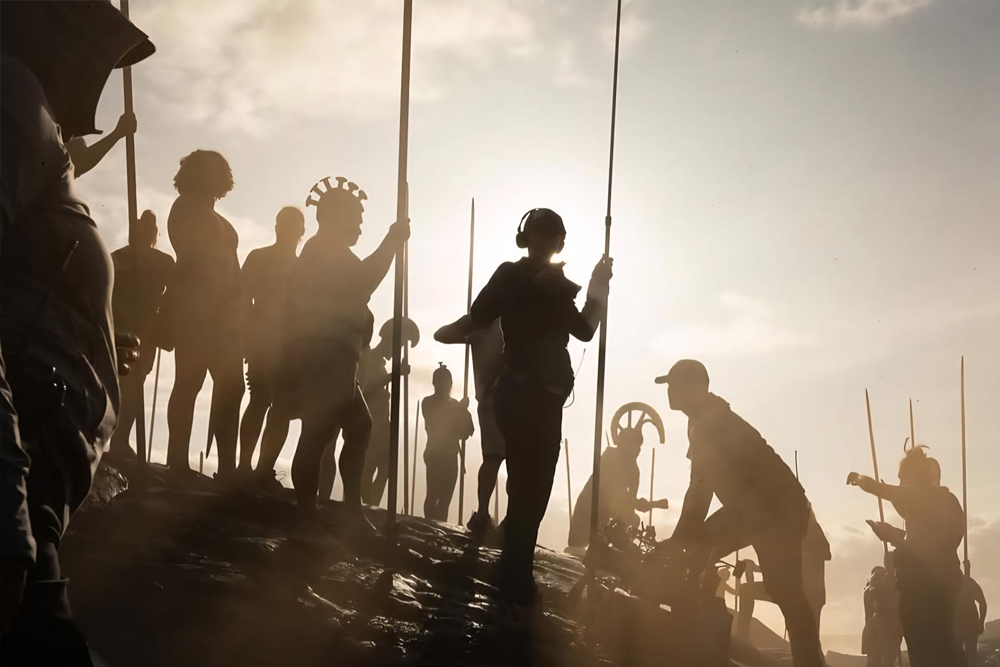
While recording Chief of War Visser missed an opportunity he’d like back. “The first day I met Jason we were traveling to a remote location in Maui. It was a splinter day so I had my full bag setup and when Jason saw me he pretended to stab me with his prop dagger. One of my great regrets is not having decided to do a dramatic death in front of him.” Instead, the production sound mixer elected for a professional introduction. “We get along great but that could have made for a real fun moment.”
Throughout the production which spanned both Hawai’i and New Zealand (Fred Enholmer served as the New Zealand sound mixer) Visser balanced a nimble approach with expertise and reliable technology. “Hawai’i production transportation regularly involves gators, off-road utility vehicles, good old fashioned hiking, and even helicopters,” he says. “So the central component of my current sound cart is the Zaxcom RX-8D. The small form factor and high channel density of that unit allows for a compact setup that can be easily dismounted and carried around on a stand or even worn on a harness. And I love having full control of the reception of the RF space, having adjustable filters, and being able to retune transmitters on the fly with full remote control.” Today, Visser pairs his Zaxcom wireless with the Aaton Cantar X3, however, on Chief of War, he recorded on the Cantar X2.
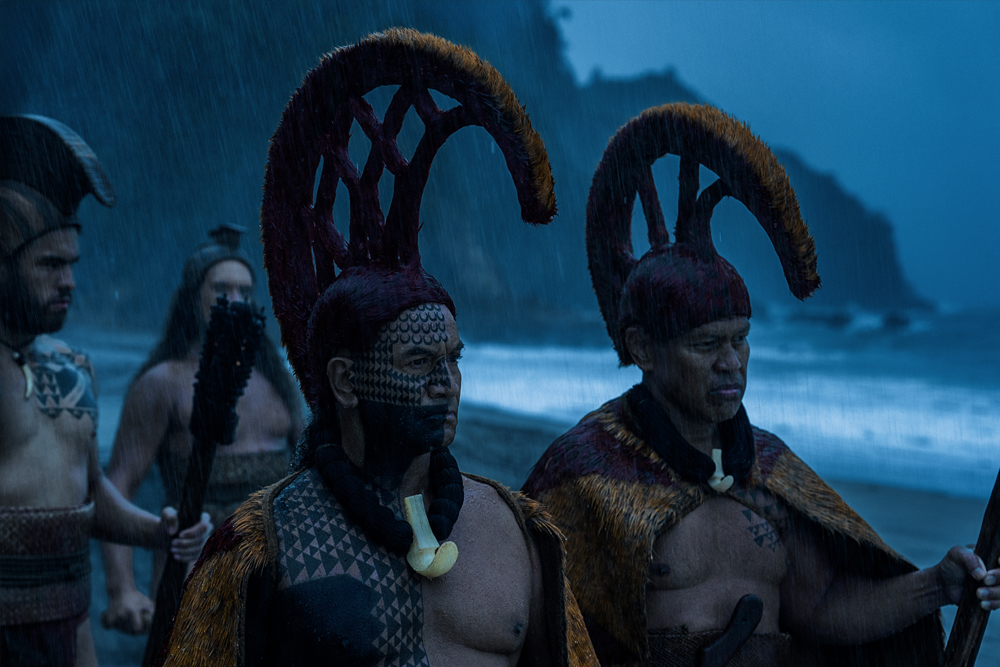
An early hurdle recording the series came in the form of wiring talent. “Certain character’s wardrobe or lack of and made us tend to lean on the boom as the primary method of sound capture. One look at the ti leaf rain capes, or “kui laʻi,” heavily featured in the show, instantly tells you to put the lav mic away,” he says. “Also the kapa material for the female characters was a simulated synthetic material coated with something which made the material seem almost non-porous, making sound difficult to pass through like normal fibers.” When a wireless transmitter was deployed, ZMT-4 or ZMT-4X transmitters were paired DPA 6060, DPA 4060, COS-11D, or Country B3 or B6s depending on the situation.
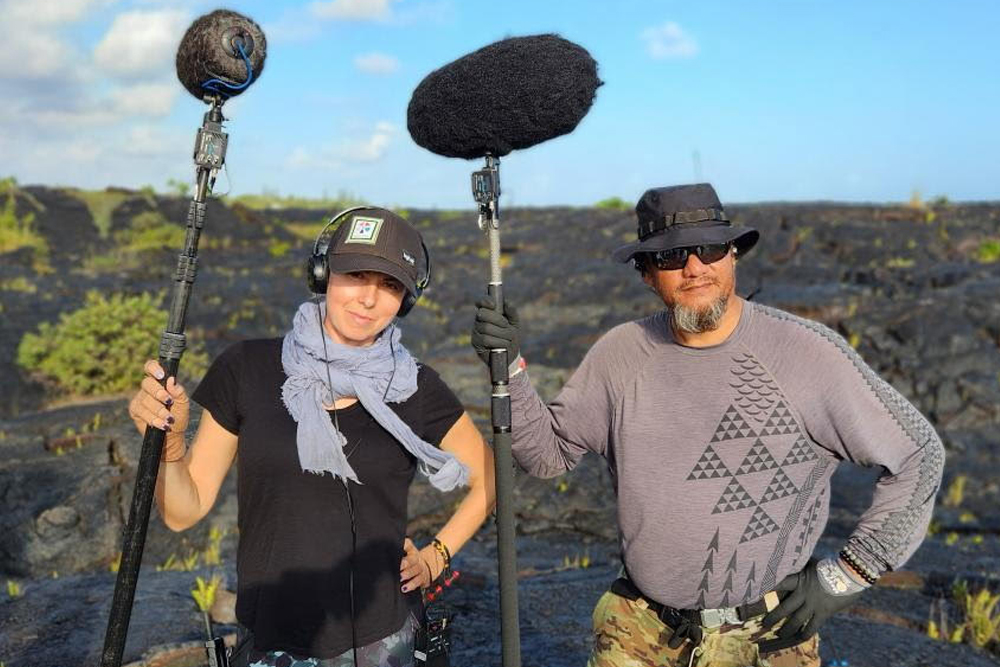
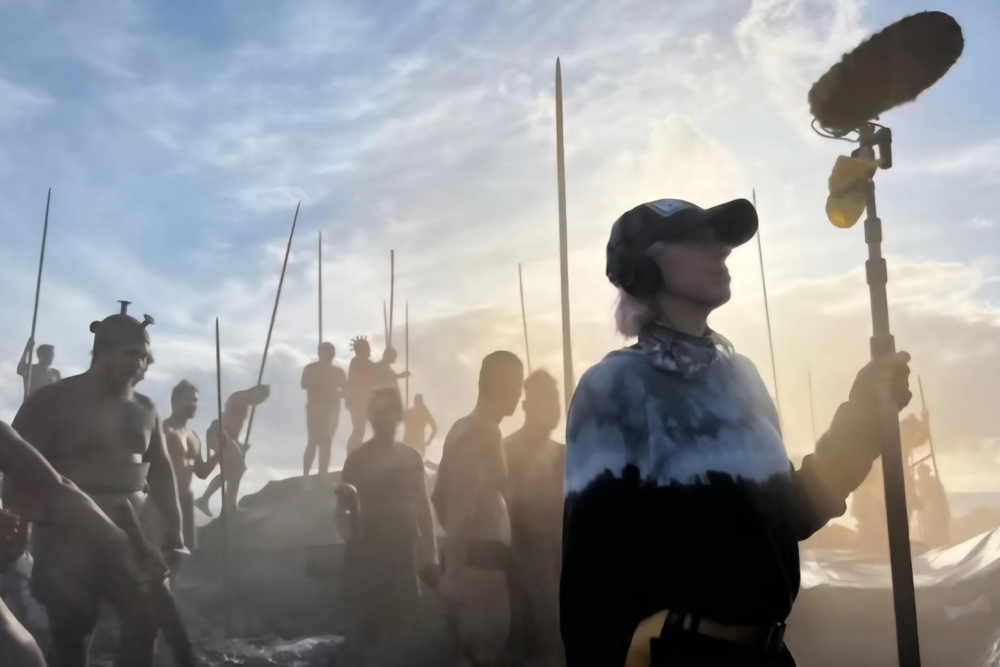
Operating boom was Hawaiian native Kū Nihipali, who is descendant of the real-life Maui King Kahekili (portrayed by Temuera Morrison). “It was very moving to see the descendants of the actual people from this battle return to the lava fields, oceans, and jungles and portray a dramatic interpretation of these real life events,” says Visser. For overhead micing, a Zaxcom ZMT-4 was combined with a number of Sennheiser MKH 8000 series mics – 8060 for exteriors, 8040 for interiors, and either a 8050 or 8090 for dedicated situations. “I like the uniform handling of the mics across the range, low self-noise, and especially their performance in humid environments,” notes Visser. “The ZMT4 is the perfect partner allowing operation in even the tightest of spaces and sound that practically matches a wired mic.”
In recording dialogue, the dynamic capabilities of the ZMT4 and ZMT4-X allowed for a high fidelity transmission. “Sennheiser 8000 mics tend to have a very powerful bass response as you get very close to the actor, like a proximity effect almost. I used this to great effect to be able to record ‘Ōlelo Hawai’i, or Hawaiian language, with rich tones,” he says. “I always treat every actor’s performance with the utmost care and don’t want to diminish their performance in any way, but I was especially sensitive with Jason’s character because of the exposure it would have worldwide. It would perhaps be the first time people hear the Hawaiian language in conversation.” Hawaiian language scenes had language advisors on set where Visser deployed Listentech’s ListenTALK, a two-way communication system which pairs transceivers to allow the advisors to hear and comment on aspects of the performance as needed.
Overseeing 2nd boom and utility was Polina Gorman. “Polina is a dancer, designer, and has on-set wardrobe experience. She allows our department to have super powers as she can break down any barriers with people, go into dressing rooms to have actors arrive to set ready to shoot, and her flexibility in being able to jump on the 2nd boom is indispensable.” For situations when range became too much for the wireless system, the sound team relied on the internal recording feature found on Zaxcom transmitters. A Zaxcom TRXCL5 Camera Link provided both IFB feeds to set and private line for the sound crew.

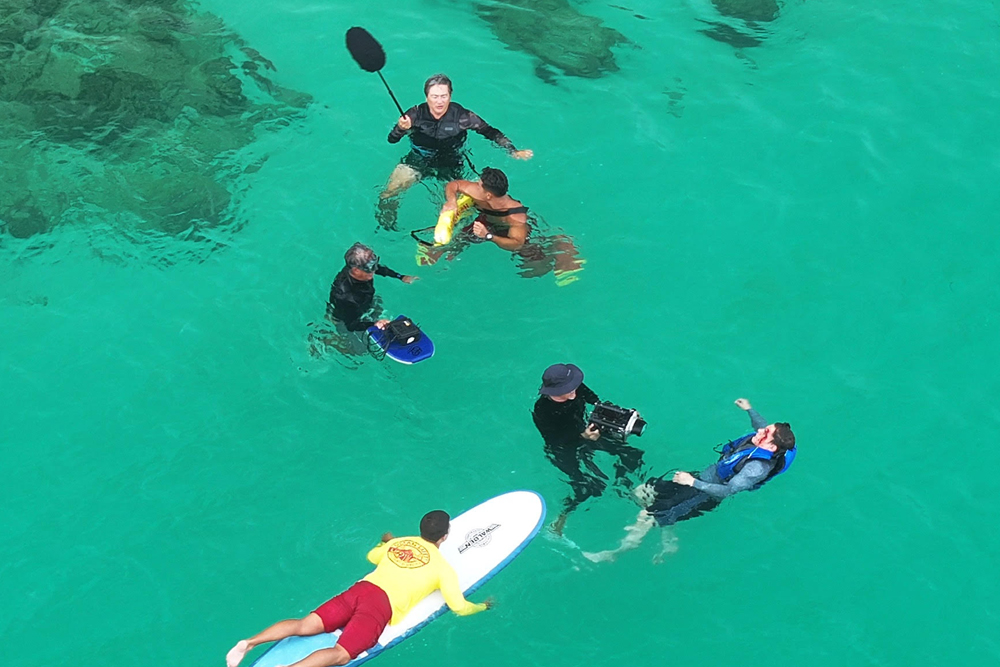
Besides dialogue, the biggest challenge was the water work. Scenes use traditional Hawaiian boats, or waʻa, to stage crossing and ambushes, conveying the deeper cultural connection Hawaiian’s have with the ocean. “My very first experience with boat work was reality television and you soon learn that no matter what happens, the boat’s not there for you. The boat is there first and foremost for safety and then secondly, for camera. No matter how long your boom pole is, the boat may never be close enough for you to get great sound. So when you do boat work, you have to put yourself in line with the work that you’re presented with.”
What it meant for production sound was to utilize solutions unique to Hawai’i, including going in the water. “Throughout different times in my life, I’ve been an avid surfer and swimmer, so there are some conditions in the water that I feel safe in. And when there are unsafe situations, I’m able to recognize them. Though, keeping the gear safe is a different issue,” he says.
On Chief of War, Visser would enter the water with the boom or Kū Nihipali would operate the boom from a jet ski or small zodiac-like fishing rig. “When you make the decision to swim with a boom pole that you have to keep dry, it’s not one to be taken lightly. There are situations where we’ve had to swim a quarter of a mile or more from the set and back to shore. You have to be able to handle the currents and you also have to be able to keep up with the water photographer. I think it’s important to match the energy of the water photography with your own approach. When on jet skis, being able to safely operate it while handling rough conditions, bashing through waves is akin to bull-riding. On the other hand, if the photography is being done by a swimmer, or the cast is swimming, it is unsafe to operate a jet ski in close proximity and is better to embrace being in the water. The currents and the wind affect both you and the photographer in the same way and you both use the same method of motivation to move through the water.”
In one scene Momoa’s character dives into the ocean from a waʻa to sedate a reef shark to bring it back to his village. “The shark was of course CGI and we had a reference prop for usage in specific shots, but the main thing I can say about the boat work is to be as prepared as you can, but also understand that much of the success of boat work is being able to be capable of shifting gears and be as self-sufficient as possible,” Visser explains.
“Because these were historic replicas, very few people could actually be on the boats and you had to be able to move around the water quickly and safely. It was definitely a case of less is more, for if we brought too much support equipment, it would slow us down and take away the ability to be fast and flexible. Sometimes that meant jumping on a chase canoe that would match course with the hero picture canoe, other times it meant riding a jet ski. But oftentimes it’s slipping into the water and following the photographer or else we would lose the opportunity to get the mic in the right place for whatever action unfolded.”
Visser emphasizes the workflow is approached with the highest of safety standards. “Brian Keaulana, who is a producer and captain of the water safety team on Chief of War, is who we work hand-in-hand with. He’s aware of my capabilities and I have the most trust in his team. We’ve got a systematic way of approaching water work.”
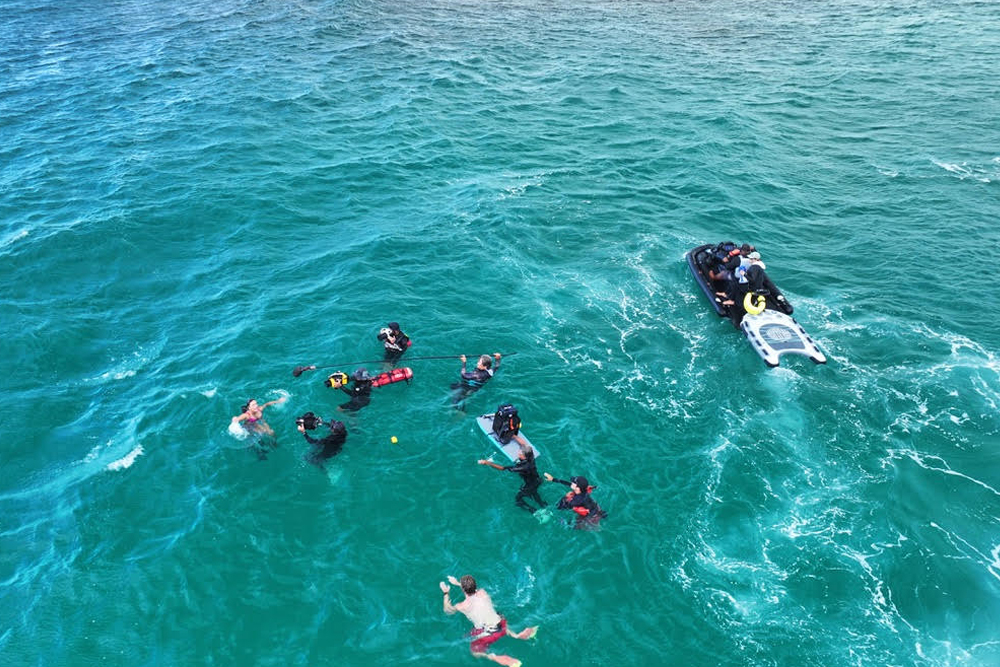
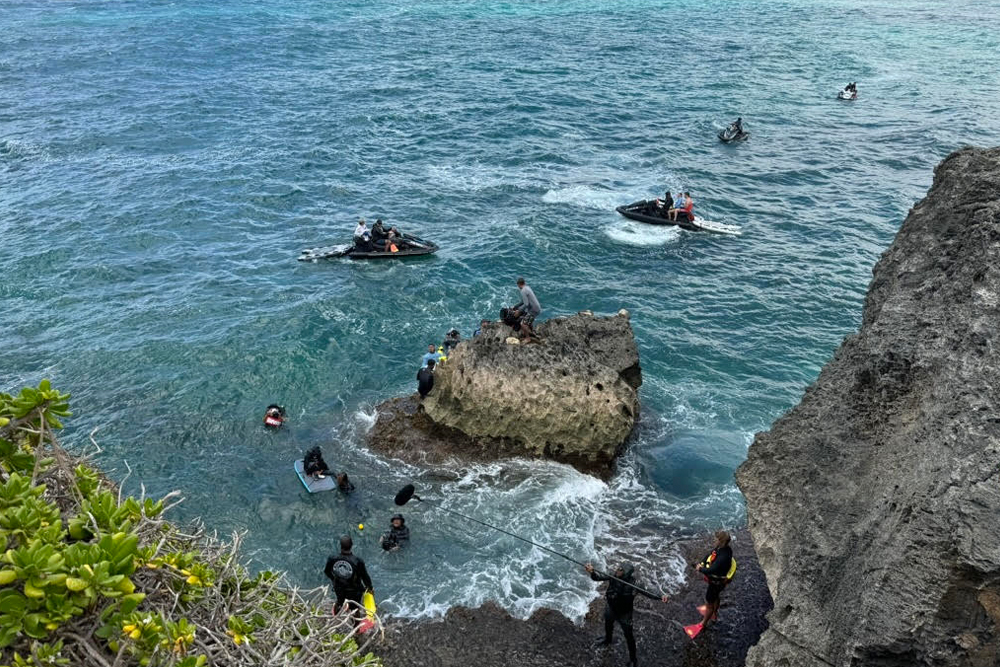
In describing the type of production sound Visser can record while in the water he says, “The water is actually, if you’re not in a breaking wave, a great acoustic environment. It’s sort of diffusive. The noise that it does make is pleasing and people’s voices tend to carry. And photographers love backlight, so usually it’s not too many shadows to deal with. So, it’s actually a really fun place to work.”
Visser believes each approach can impact the quality of sound. “When we were recording the first episode of Rescue: HI-Surf, we were on a nearby boat unable to record anything usable. And then when we got back to the beach we recorded some wild lines. When you watch that episode you can see the kids in the water saying something but it was very obvious it’s not what they were actually saying,” he recalls. “It was one of those shows that was airing and shooting at the same time. And the directive we got from the production was basically stay out of the way.”
The production mixer was determined to make a change. “Later in the season, they had reshoots of that first episode, and by that point in time I had established more proactive approaches to water work and hashed out strategies with my team while receiving the approval from Keaulana overseeing everyone’s safety. So when you see certain scenes of that first episode cut together incorporating the reshoots, you can really tell the stark difference between wild lines and production sound. I told the water photographer, the renowned Don King, that sound makes the image look better. That particular phrase stuck with him and he became a strong proponent for sound. It became a collaborative partnership which is so important because if you have people fighting against you, it’s just going to be difficult. But if the whole team wants production sound there, it can make for a really special experience.”
You can follow more of production sound mixer Tom Visser via Instagram or IMDB.