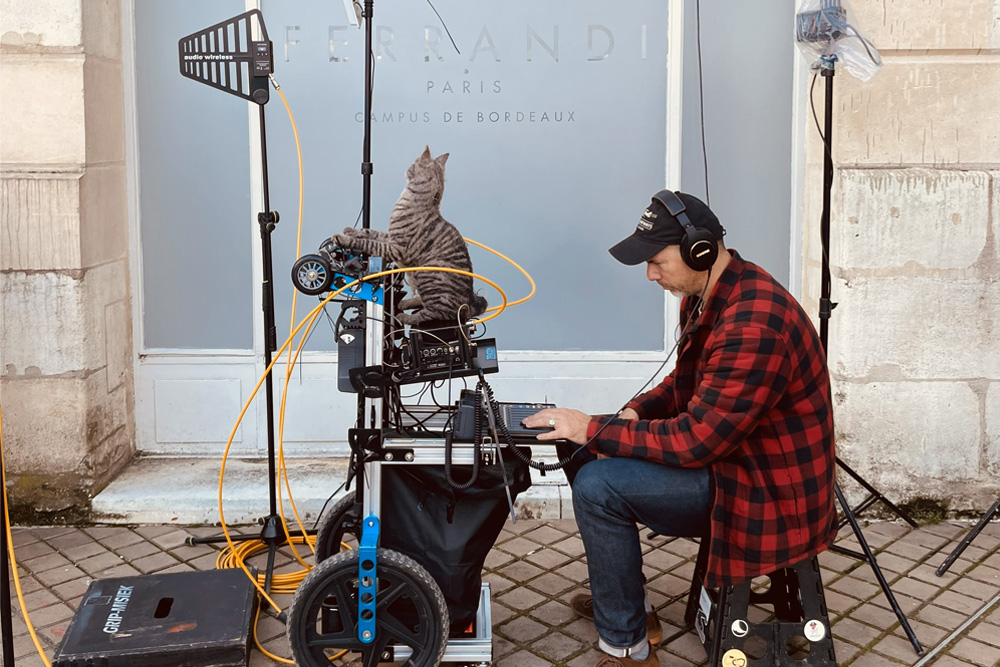
Production sound mixer Marcin Matlak turned back the clock to 1835 Paris to record the aural symphony of director Michal Kwiecinski’s biopic Chopin, Chopin!, where a young Frédéric Chopin (Eryk Kulm) drifts through royal chambers performing for the elite, while quietly deteriorating from illness. Between soirées and a romance with George Sand (Joséphine de La Baume), he tunes a life of glory and fragility into his most inspiring masterpieces.
For Matlak, this meant developing a workflow that captured not just the dialogue but also the live music on set. “This movie only works because Michal is a type of director who really cares about sound,” says the Poland-based sound recordist, who has over 20 years of experience and now operates the Warsaw sound shop Durian Sound. “I am really thankful for him because he gave me the opportunity to build this sound journey from the beginning.” Aiding each step of the journey was Zaxcom. Matlak’s minimalist setup included the Nova, Aria-8 control surface, ZMT4, ZMT4-X, and TRX745 transmitters and MRX414 receivers. “It wouldn’t have been possible to record everything we recorded without Zaxcom,” he says.
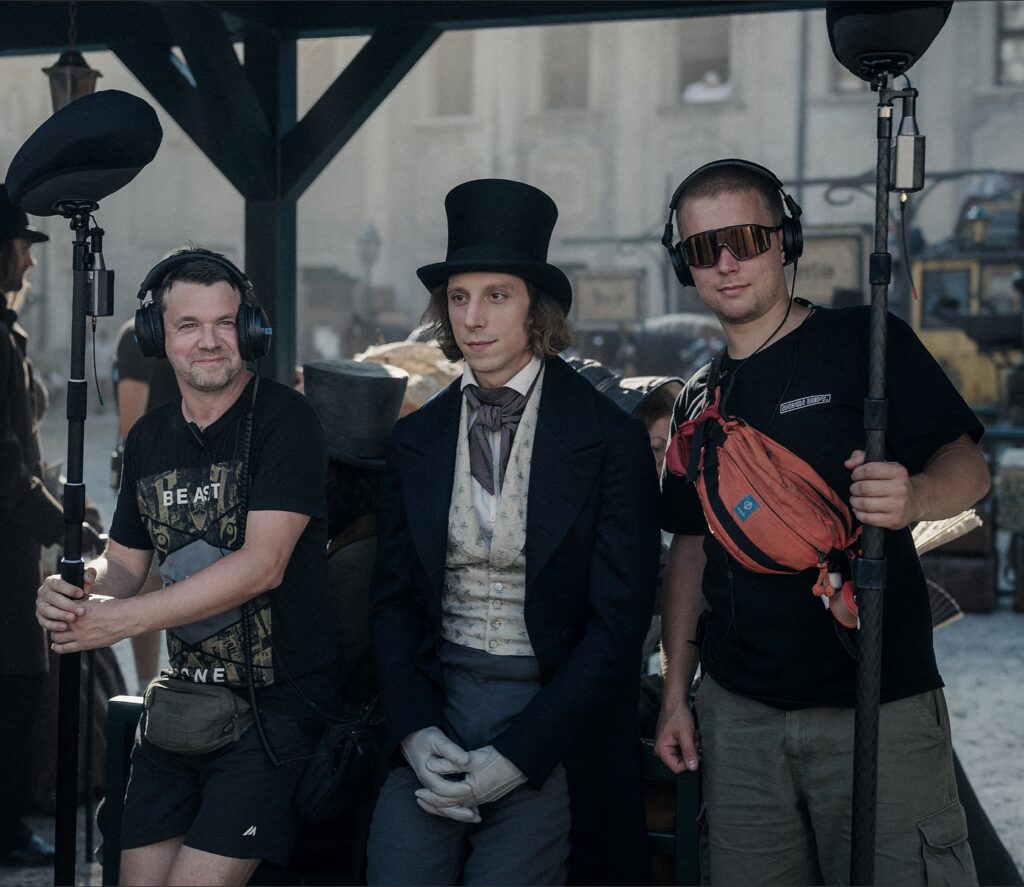
Production shot mostly on location in lavish castles around Poland and stints in Bordeaux, France and Mallorca, Spain where Chopin spent part of his life. Approaching dialogue, Matlak deployed overhead booms using a TRX745 plug-on transmitter while micing talent with a ZMT4 or ZMT4-X transmitter. “We’re always using lavs these days for many reasons, like wide and tight shots or off-camera lines,” he says. “We will pair our transmitters with DPA lavs and they sound really good. For us, a very important part of the sound story is how well the recordings from the transmitters match the quality of the overhead or plant mics. Zaxcom gives us that quality.” Operating the booms were Krzysztof Klimko and Mateusz Rychlicki, who was also a playback editor.
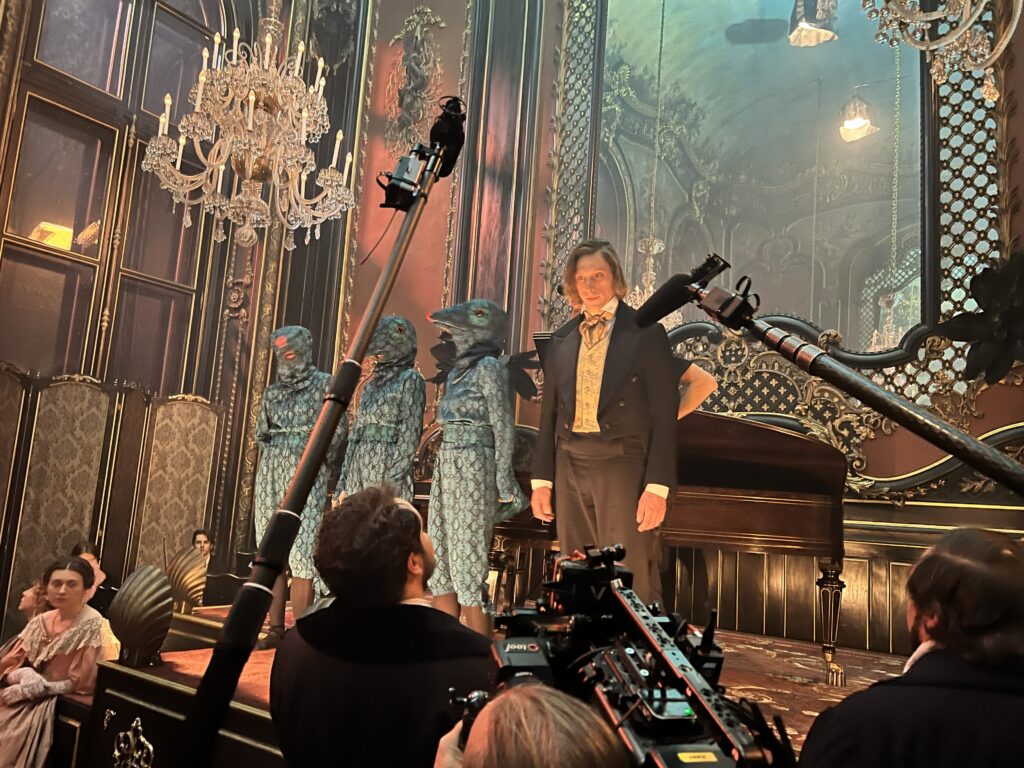

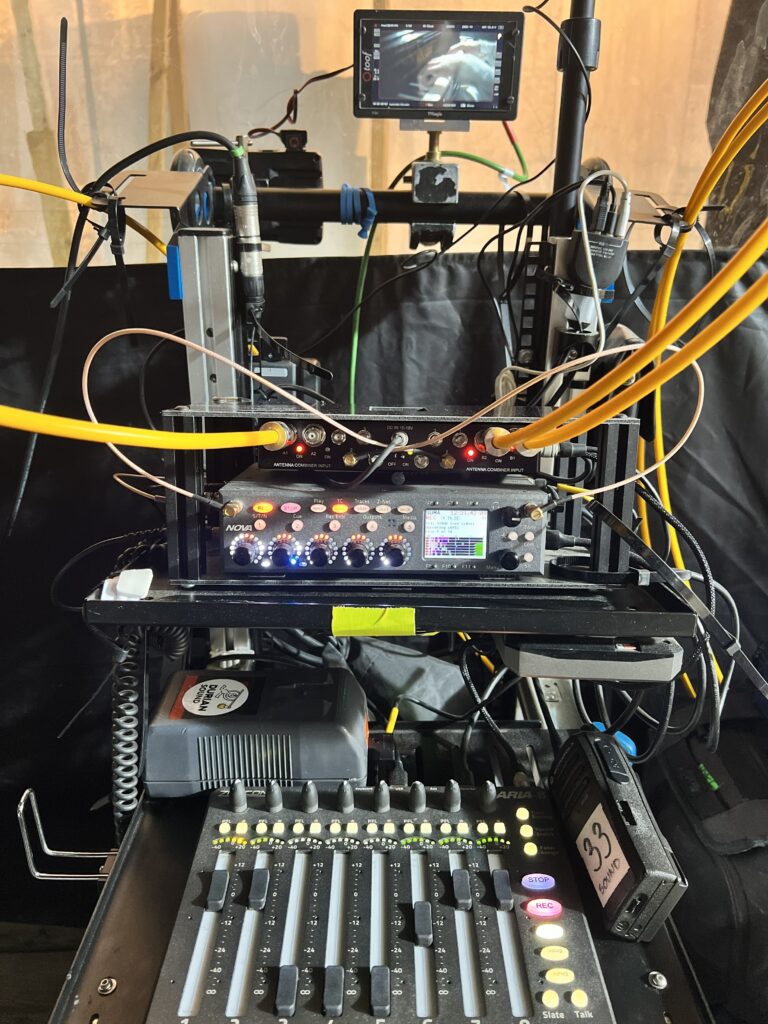
Part of production mixer’s workflow was the internal recording feature found on Zaxcom transmitters, which can simultaneously transmit and record audio to an internal memory card. “When we’re recording scenes with a big range, it’s easy to place a transmitter with a mic and record internally. It’s comforting to know you have that as a backup if you ever need it,” says Matlak whose love for sound started in high school where he later studied sound engineering at the Wroclaw University of Science and Technology.
Scenes involving music were filmed with a continuous take approach. Bringing the believability to pieces was Eryk Kulm’s experience as a pianist. “Eryk traveled to France for several months to practice the pieces he would later play in the film under the supervision of a piano teacher. He’s very talented and played everything by himself in the movie,” notes Matlak.
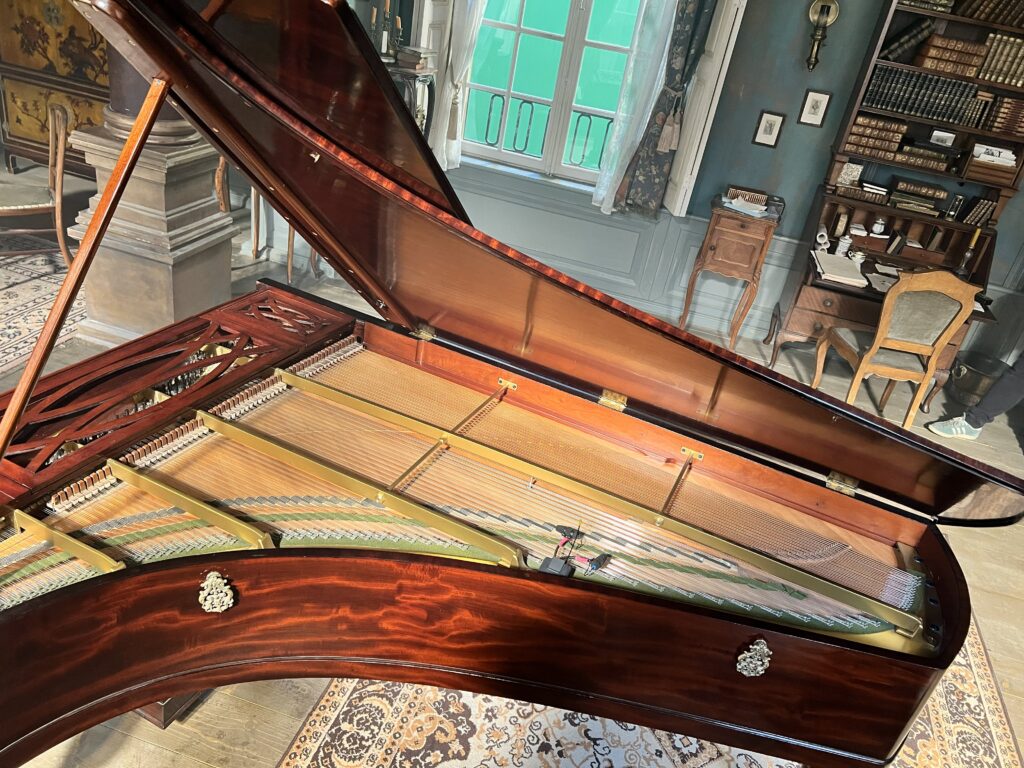
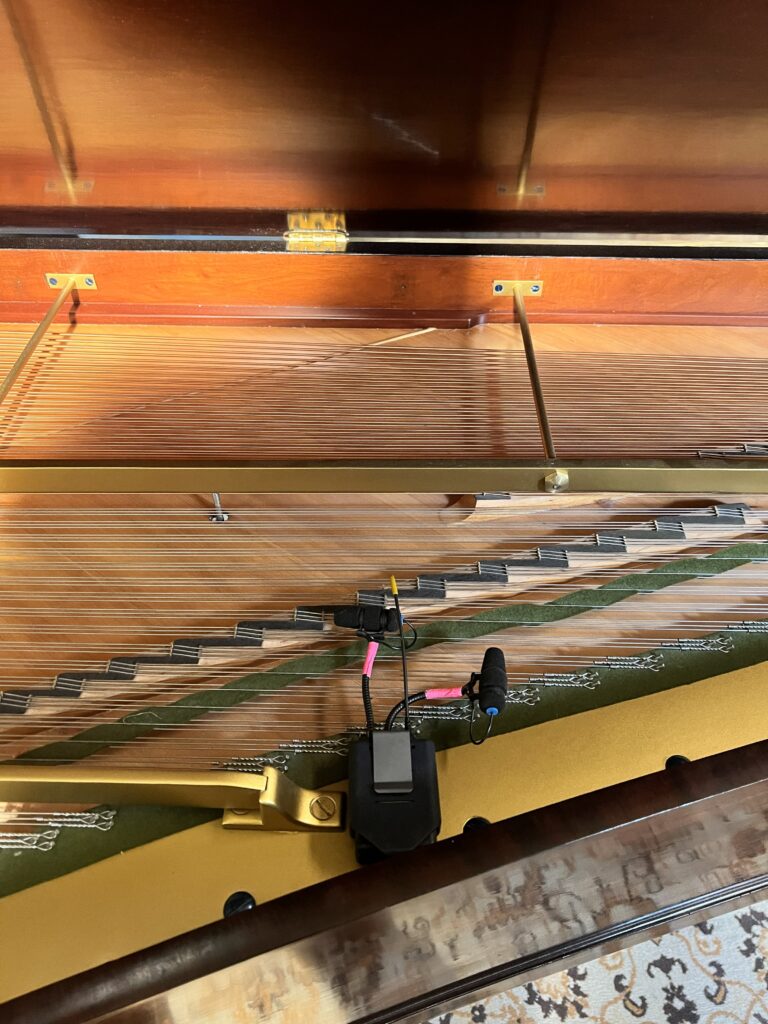
Sound used different wireless setups to record the piano depending on the moment. One involved a ZMT4-X paired with two DPA micro shotgun mics. The other was a ZMT4 paired with an old Oktava microphone. The setups would be placed inside the piano and/or underneath. For scenes with dialogue and music, a Zaxcom TRX745 plug-on was paired with a microphone and placed off camera to record master shots while boom operators would cover the scene during tighter coverage. “In one scene, there’s a huge party and Chopin is playing at the same time he’s speaking. Michal wanted to do the shot live and record all the sound. We were able to find a solution because of Zaxcom,” says Matlak. Controlling playback was Malgorzata Mendrek and Michal Walczynski.
In post, sound recreated the same recording setup in studio with the team at Dreamsound led by supervising sound editor Marcin Kasinski. “After consultations with the Fryderyk Chopin Institute, the Chopin works were played again by Tomasz Ritter, an outstanding pianist,” says Matlak. The additional recordings added depth to the post mix.
No matter the challenge Matlak suggests, “The first important thing is to have good boom operators. But even more important is having a helpful DP, and our cinematographer Michal Sobocinski understood this very well [Sobocinski won a Bronze Frog at Camerimage]. Something very important in all this was having a DP on your side and that was something the sound department was very thankful for.”