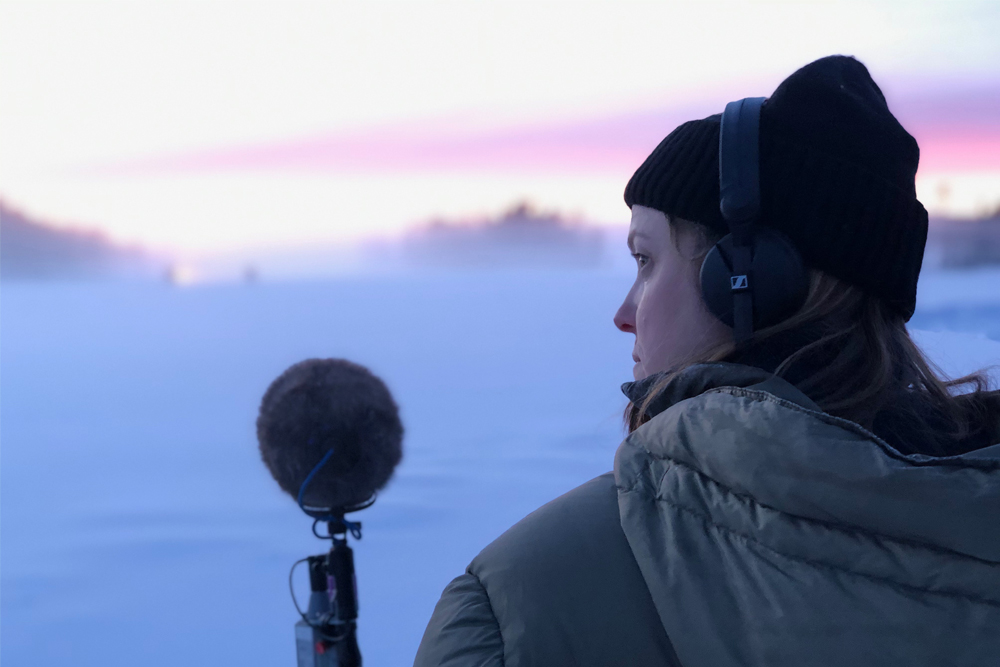
“I was nervous of course,” says Jennie Segerheim recalling the first time she transitioned from boom operator to production sound mixer. The Sweden native began her career in music before shifting to field recording. “I was a musician early on and I studied to be a music producer. I tried doing everything in the music studio and it turned out to be a great experience for me,” she says. Segerheim has been happy about the switch ever since, and for over a decade she’s mixed and operated boom on every type of project. But her bread cardamom bun and butter has been television and features, including the acclaimed coming of age Netflix drama Young Royals, a biographical series documenting the infamous Pirate Bay torrent site, and the Netflix period thriller following Sweden’s first female police officers in The New Force. Zaxcom has supported her along that journey.
Since booming her first film, Sami Blood (2016), a haunting story about a girl exposed to racism while attending boarding school, she’s alternated between boom and recording production sound. “I like both,” she admits. “I like booming because it’s really fun and you’re close to the action. And I enjoy working as a production sound mixer because it can be more technical.”
Segerheim honed each craft in the field suggesting “it was hard in the beginning” but having a music background helped her to pick up both trades. “Oscar Lovnér is a Swedish sound mixer who taught me a lot about mixing and Zaxcom. He was one of the first to buy Zaxcom in Sweden and he took me in to mix scenes on Young Royals. He did the same for the upcoming feature Arkipelag with Gustav Skarsgård and Fares Fares we shot last summer,” she says. “But a lot has been trial and error. Learning by making a lot of mistakes and reading a lot of manuals and watching a lot of videos. I have so much more I want to learn about filmmaking.”
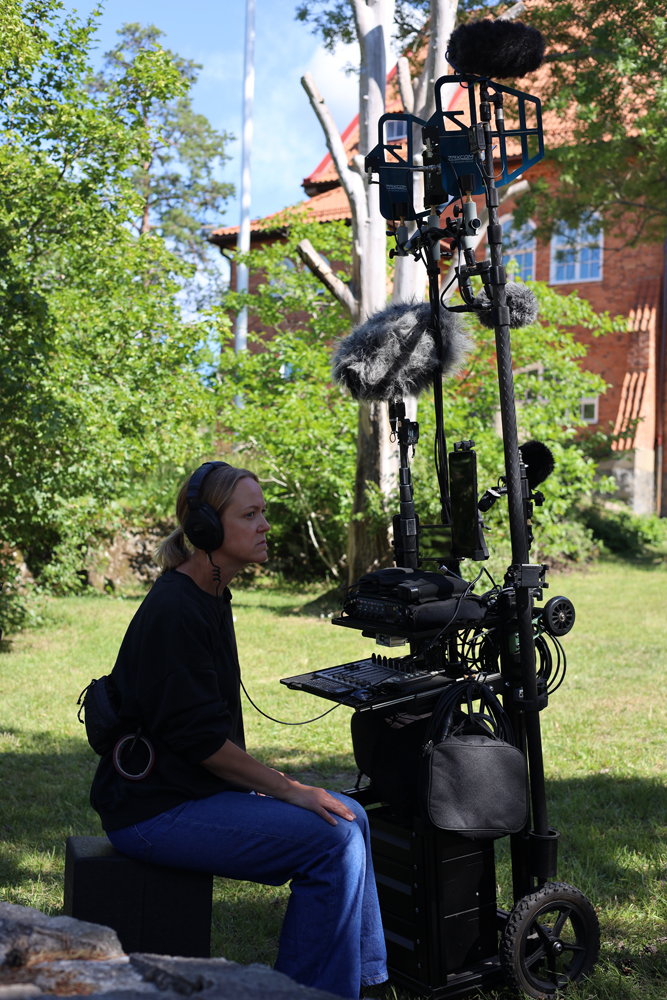
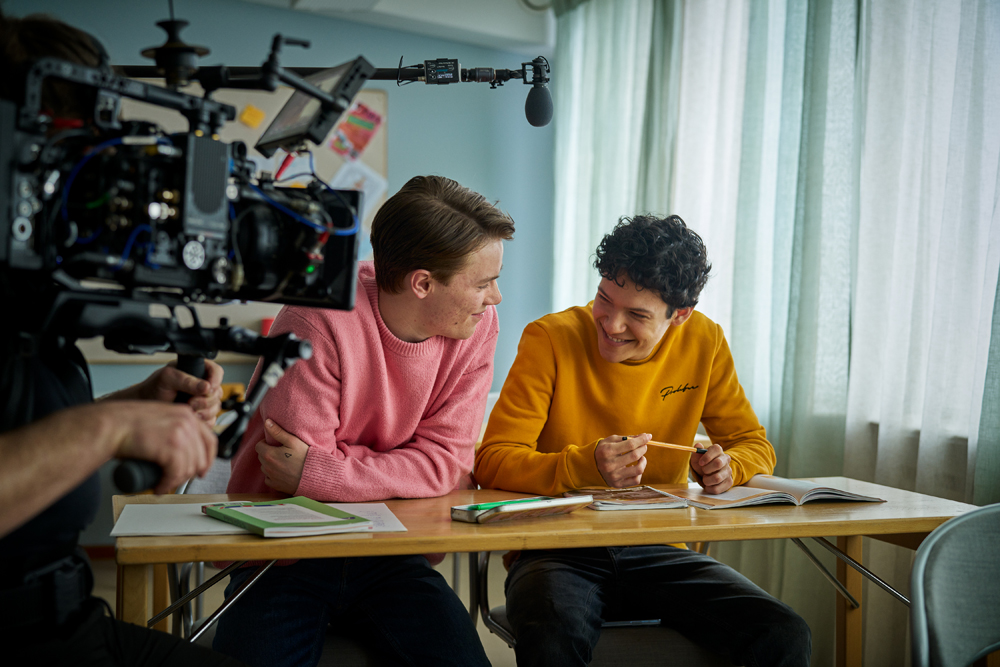
Photo: Robert Eldrim/Netflix

Photo: Johan Paulin/Netflix
On mix days, Segerheim likes her setup to be “light, small but operational and well thought through.” A SOUNDCART MiniCart is the base for a Zaxcom Nova, Aria-8 control surface, MRX414 receivers, and several ZMT4 and ZMT3 transmitters. DPA 6060, 6061, and 4060s lavs are paired with Zaxcom transmitters for talent. “I prefer to have my cart really small in order to fit into all the small spaces I usually end up on location. For instance, a scene on The New Force I was in the closet of a girl’s really small bedroom as most of the scenes were shot on location rather than in studio,” she says.
For boom, Ambient QP series poles are complemented with ZMT4 transmitters and overhead mics including the Schoeps MiniCMIT, Sennheiser MKH 50, and Schoeps CMC 1 with a MK 41 capsule. “I like the base the MKH 50 gives and I love the CMC 1 with the MK 41 for close-ups and commercials,” she notes. Completing the setup is an SP Connect bike mount phone holder fixed to the boom, which she uses to run apps such as Teradek’s Vuer HDR for live monitoring via mobile device.
On the Netflix series Young Royals Segerheim operated boom for the first season alongside production sound mixer Andres Niva. It also marked her first introduction to Zaxcom as Niva recorded on a Nova with Zaxcom transmitters for talent and the ZMT3-Phantom transmitter paired with a Schoeps CMIT-5 for boom. “It was then I made the decision to switch from Sound Devices to Zaxcom and I am really glad I did. I really like their innovations,” she admits.
However, during its second season she took leave to welcome a new chapter in her life. “At the end of the first season I decided to step away because I was pregnant with my first child. My stomach was bumping into everyone,” she says laughingly. Segerheim did return for its final chapter to work as a boom operator but also shared mixing duties with production sound mixer Oscar Lovnér who took over for Niva. Lovnér also recorded on the Nova with Zaxcom transmitters for talent. “I mixed some of the episodes but I can’t take credit for a whole season. Oscar did most of the work behind the mixer,” she says.
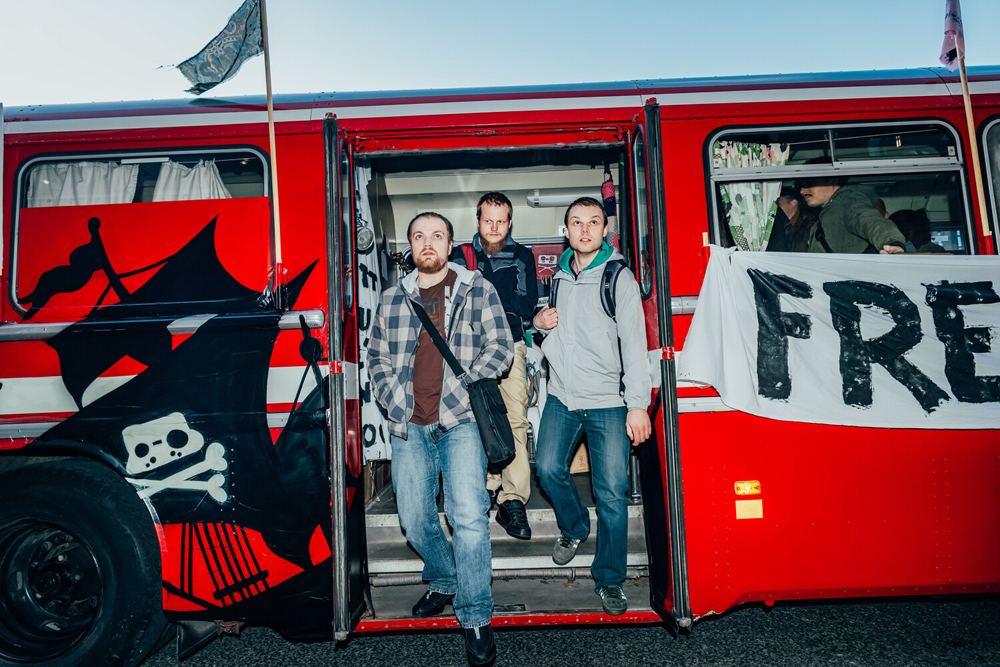
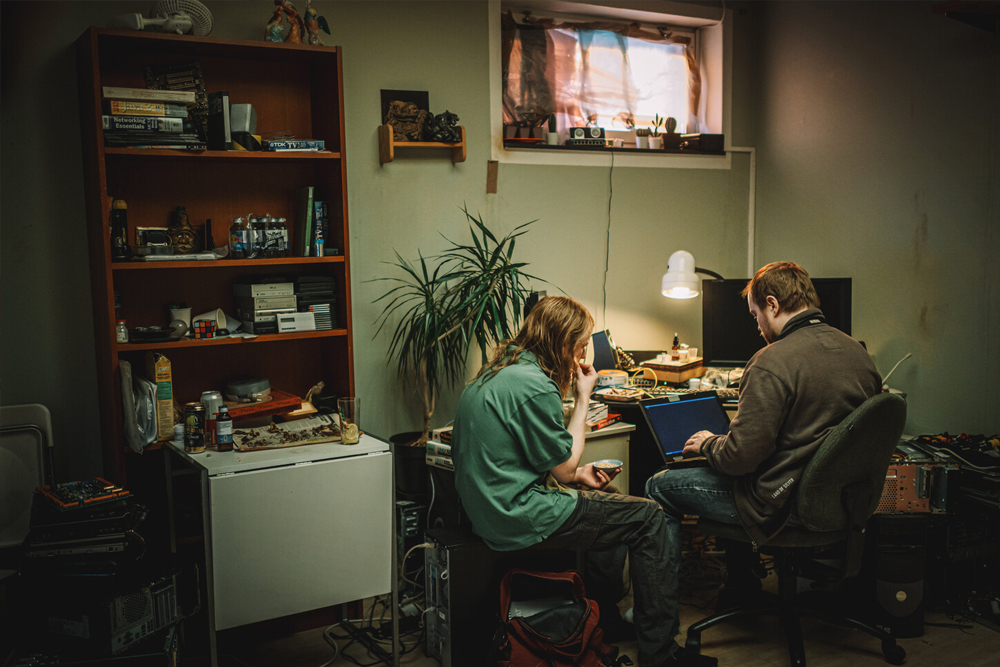
The mixing opportunity segued into a full-time production sound gig on the six episode miniseries The Pirate Bay about the rise and fall of the file-sharing website. Segerheim recalls one instance where Zaxcom wireless proved to be more reliable than expected. “I had an elevator scene full of mirrors. No one except the DP and actor Simon Gregor Carlsson who plays Peter, one of the Pirate Bay co-founders, could fit inside. Peter was having a phone conversation so we placed a ZMT4 on him.
Because I thought we would lose contact with the transmitter sooner or later because they were going several floors down, I wanted to put the transmitter in internal record mode as a backup to the wireless transmission. But when I went to make a new track on the microSD card I thought I put it in record mode but I hadn’t. I didn’t notice until we were done filming the scene and I panicked. Luckily, we had a good transmission signal all the way down the elevator on the take that was chosen. One lesson I learned that day is to double and triple check.”
She also admits Zaxcom’s internal recording feature has saved her on other occasions. One such moment came during a car scene on The Pirate Bay. “I was in a follow car and all of sudden my primary card broke. Everything we recorded during that scene was gone. When we finally stopped, I was able to find everything we recorded on the transmitters’ microSD cards. It feels safe to always have that backup… as long as you remember to hit record.”
When asked about her approach to mixing she explains, “I usually have one wireless mix track for all the radio mics and then one mix track for boom. Then there are ISO tracks for all the booms and actors. And I almost always use a stereo mic setup for ambience when we’re outside for cars passing, etc. This was especially true on The New Force. I recorded a lot of old cars simultaneously as we recorded dialogue. I will put plant mics, stereo mics in the other direction or far away so we can separate them from the dialogue. I think it gives post a good option to use afterward.”
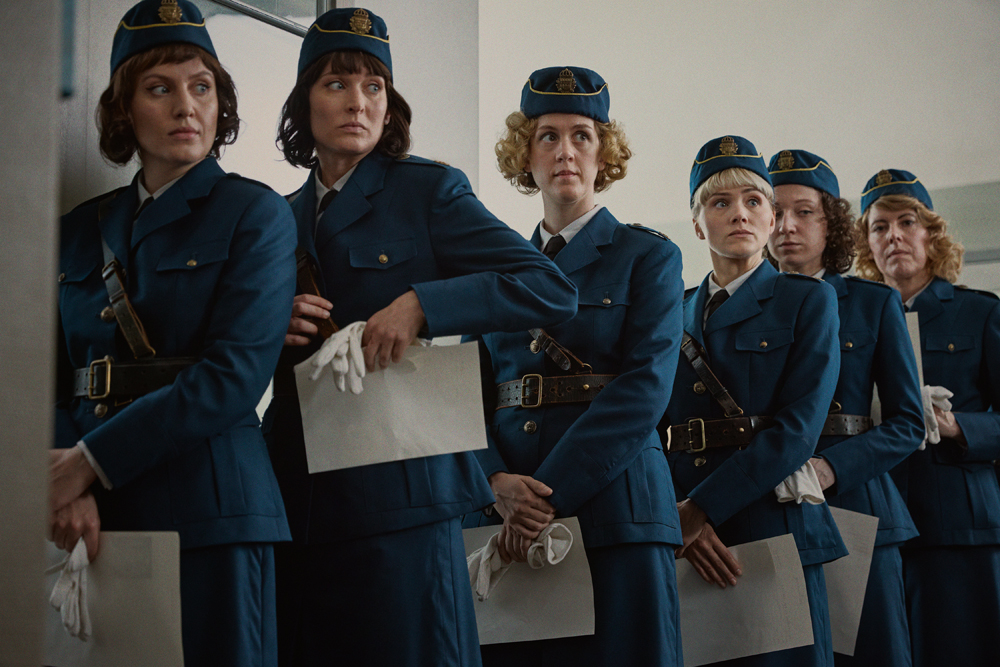
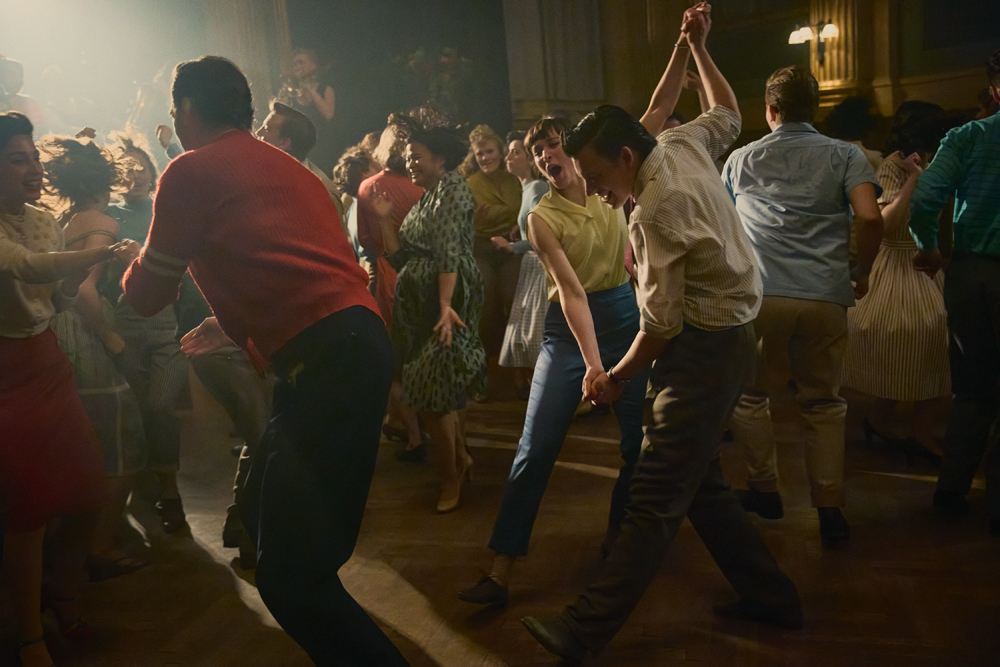
Photo: Jonath Mathew/Netflix
She mixed all six episodes of The New Force, inspired by the true story of Sweden’s first female officers joining an understaffed district in the 1950s. During prep, Segerheim worked closely with the costume department to hide wireless microphones into the hats of the officers, and at times, had twelve tracks running at once – especially for scenes inside the police station. Her biggest hurdles were music scenes.
“I really enjoyed the dance scenes in the series. A lot of challenges and a few really busy days but that’s the fun of it. There’s a scene when Sive [Agnes Rase] and Arne [Rasmus Luthander] meet some friends at a club. We wanted to play a thump track so that all of the extras and actors had something to dance to. I used subs that were quite loud and resonated with the mirror walls. But it went well and I can’t really tell in the final mix,” she says. The music and thump tracks were fed on a stereo mix. “I had to make a stereo mix of the song beforehand to have the original music on the left and the thump track to the right to pan between during the action and dialogue. At the same time, the musicians had to listen to left pan original music so we fitted them with Phonak earpieces to hear the track.”
Asked if she already started to pass down what she’s learned to up and coming sound enthusiasts she says, “I had two interns on The New Force and it was a great experience for me to describe how and why I do things the way I do. My best advice for anyone new in the business is to listen. Literally, take off your headphones and listen to how reality sounds. How the different voices of the actors sound. Is the background noise something you want to keep as ambience or should you try to eliminate it? Where do you want to place the microphone for realistic sound? Do you want the sound to be realistic is another question. If you’re a boom operator, try not to stand in front of the 1st AC. But most importantly, be kind and respectful. Always ask your talent if it’s ok for you to place the microphone when you radio mic. Don’t be afraid to try new things or set ups. And ask questions. I ask a lot of questions.”
You can follow more of her work on Instagram or connect via LinkedIn.