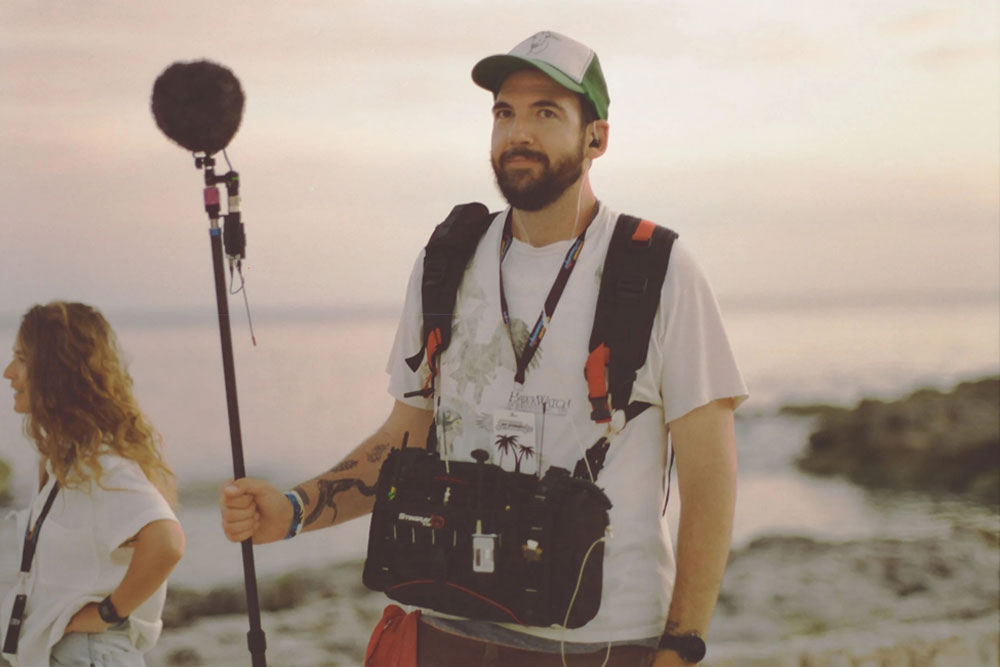
Benjamin Nimkin began his career in sound in the most serendipitous way. “I was walking home one day and I found a boompole lodged in a fence. I took it back and there was a sticker on it with the owner’s information. I tried to contact them but they never got back to me. So thank you,” he says of the moment that kick started his profession in 2012. The New York-based recordist hasn’t looked back since, working across every type of project with one genre standing out more than other: documentary.
“I went to graduate school for social documentary and was a cameraman in Utah, where I was born, for events like the Sundance Film Festival. Then I stepped into editing before making the move to sound. As a mixer, I love the social and technical components to it and the on-the-fly challenge,” he suggests. “During production you don’t truly know the talent’s next move so you can’t procrastinate. You have to do it now or never. That pressure works for me.”
Nimkin’s passion for the genre has made him a go-to recordist for high profile shows including Rest in Power: The Trayvon Martin Story, Apple TV’s Make or Break, that takes viewers inside the World Surf League, and Hulu’s Call Her Alex, which follows podcast giant Alex Cooper’s journey to the top of the industry. His latest is Apple TV’s The Dynasty: UConn Huskies, a three-part docuseries chronicling the rise and dominance of the UConn women’s basketball program under legendary coach Geno Auriemma, who has led the team to 12 NCAA national championships since 1995. The production started out anything but ordinary.
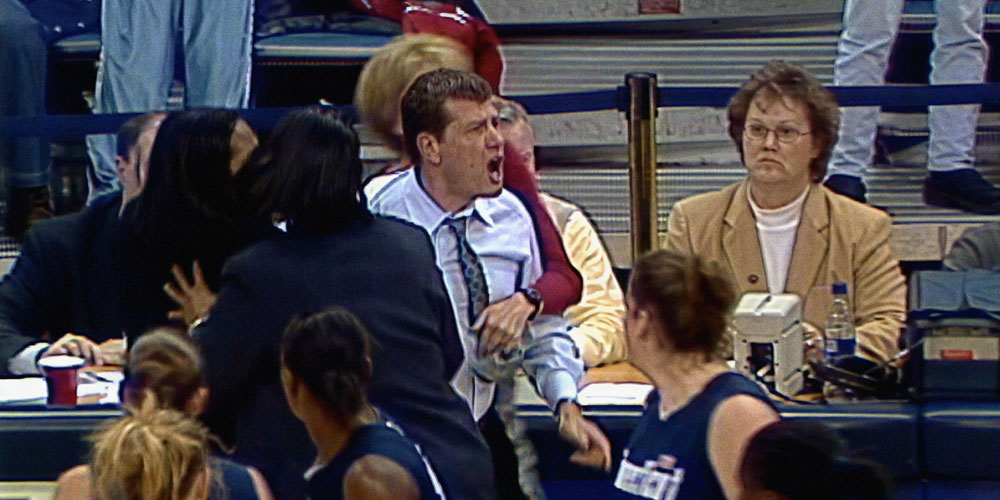
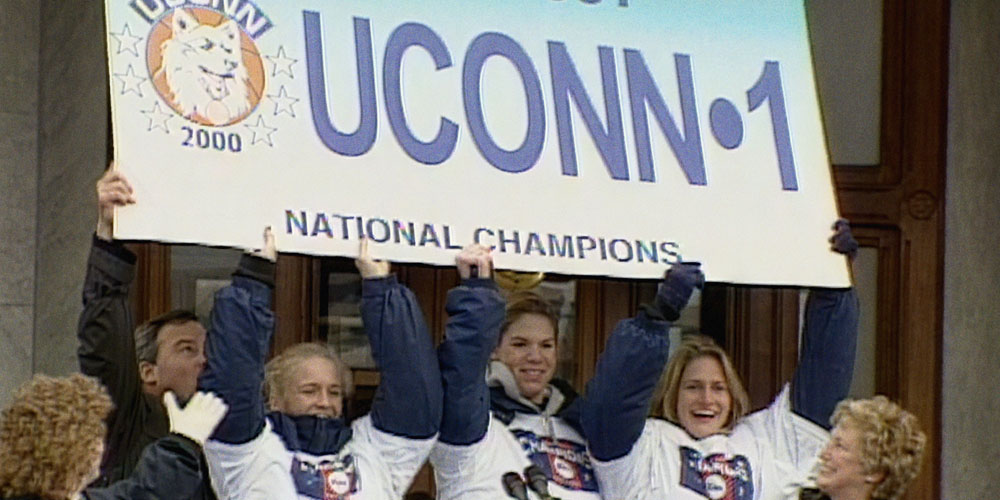
“I came on very early with cinematographer Vasilios Sfinarolakis, who I’ve known for years. He recommended me to Skydance Sports, the production company behind the project, and they had a very modest development budget. So initially it was a bit of a hustle as we didn’t immediately have a director signed on, and for the first couple of games, it was just the two of us filming,” explains Nimkin, who served as lead sound mixer. Turns out, the tight-knit crew paid off.
“Vas and I had to set the precedent early on and develop a consistency with the players and Geno. And to Skydance’s credit, they understood the importance of maintaining a consistency with the crew which allowed the players to see us every day and develop that trust that opens up a world of possibilities. They knew that we had their best interest at heart and that doesn’t always happen with documentaries.”
In recording the show, the self-taught mixer looked to Zaxcom, which has been part of his toolkit from the early stages. “I had a brief run with a recorder that had a lower track count and it quickly became apparent that wasn’t going to cut it,” he recalls. “At the time, I was at ProSound, which no longer exists, and they asked me if I heard of Zaxcom. They told me about the Nomad Lite and how you could purchase the unit and upgrade to additional tracks and features through software. I thought that was cool and it made a lot of sense to me so I opted for that.” For wireless, he tried a number of brands before settling on Zaxcom. “I love the Zaxcom transmitters and receivers. Everything has been an iterative process of trying and swapping things out. It’s kind of how I operate. I’m always tinkering with things.”
Today, his main setup is a 16-track Nova with two MRX414 receivers, Zaxcom transmitters, URX100 and URX50 for IFB, and ERX3TCD for timecode and scratch track audio to camera. “I sent Zaxcom an email around the time Nova was coming out about a cruise ship project I had coming up. I pitched them that I could beta test one of the early models and they were happy to do so. It turned out to be a great experience. As things came up, I would send notes and they would turn around and send updated firmware. I’m in this group called the Sound Co-op and we help each other out when it comes to tech and other things, so it was fun to do that early on.”
Director Matthew Hamachek was brought in to guide a story that spans roughly 40 years of UConn history through interviews, archival footage, and game highlights. The first two episodes unpack the coaching rivalry between Geno Auriemma and Pat Summitt of Tennessee, who won eight national titles during her iconic 38-year career. The finale switches focus to UConn’s nine-year title drought and star player Paige Bueckers’ bid to end it. Production was tasked with capturing the Huskies’ 2024-2025 season and title run.
“When Matt came on, I watched the documentary he did about the New England Patriots. And I was like, I’ll just watch the first and last episode to get the story beats because I am not a football fan at all. But after I watched the first episode I couldn’t stop. I blasted through the first five episodes in one sitting,” he says with a smile. “He’s a great storyteller who understands editing. He prioritizes the soundbite and prioritizes the interview setup for consistency. And I liked that.”
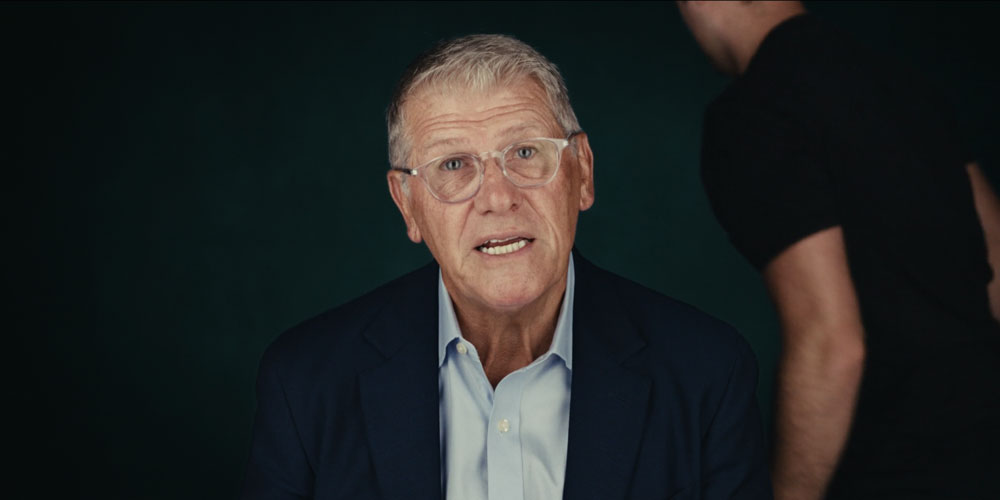
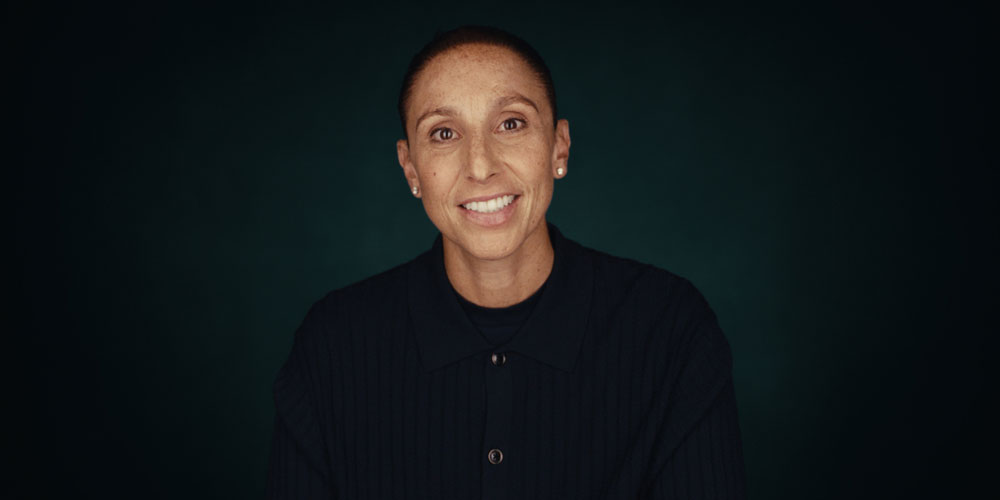
For The Dynasty: UConn Huskies, most interviews were captured in a controlled environment using the same colored backdrop, camera, and lighting setup. It allowed Nimkin to approach recording audio more aggressively. “I was able to place a DPA 4018B right above the talent to really get that intimate sound,” he says. The close proximity created a comedic (yet telling) comment that opens the series.
With Geno sitting on a stool, we hear the director roll camera and sound and then ask the coach to take off his shoes because of a squeaking sound. In disbelief, Geno says, “I haven’t heard a word from my shoes. It’s the box, it’s not the shoes.” After switching out the chair, Geno asks, “Do you hear my shoes squeaking now? No, cause it ain’t the freakin’ shoes, dude… I’ll tell you the same thing I tell my players. Why the fuck would I say if it weren’t true.”
“I loved that,” Nimkin recalls of the moment. “It was fully me getting thrown under the bus because I whispered to Matt that I heard some squeaking and I thought it was his shoes. It turned out to be the chair. They just had bought and assembled it in the hotel that we were filming in. But that line from Geno fits perfectly in the story. I think it was our second of seven interviews with him and he was like I’m tired of this already.”
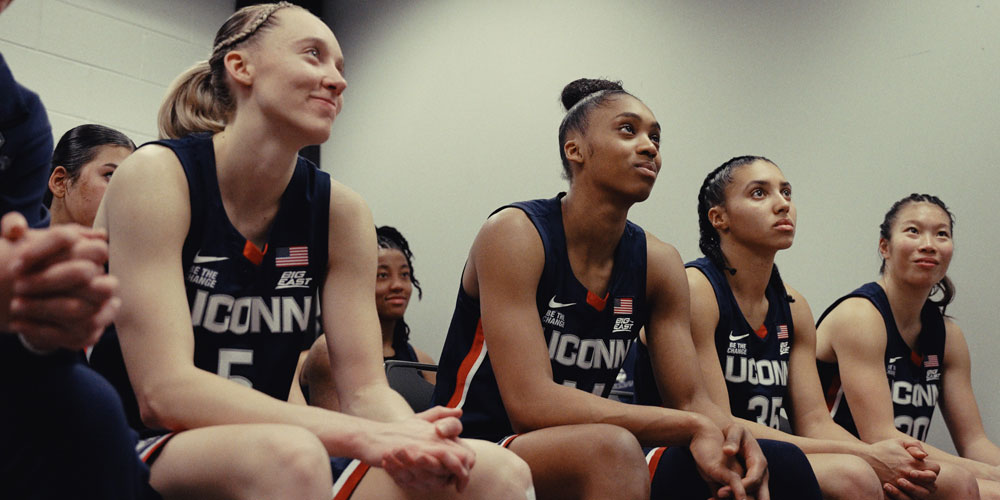
His approach to capturing the team was different. “All the stuff that’s happening behind the scenes, that’s where the story lives. That’s where we need to be. So we would be at practices, go into the coaches room or the locker room to catch them talking. And if I couldn’t wire them, I’d place a plant mic,” says Nimkin, who’d wire talent with a ZMT4 and a DPA 4061 lav. The developing action led to the director and sound mixer building a rapport. “Because we had to sometimes film in different rooms, Matt would ask me questions, or if I heard anything. Having experience as an editor I’d have some notes and he’d take them down. Then we’d go through the audio.”
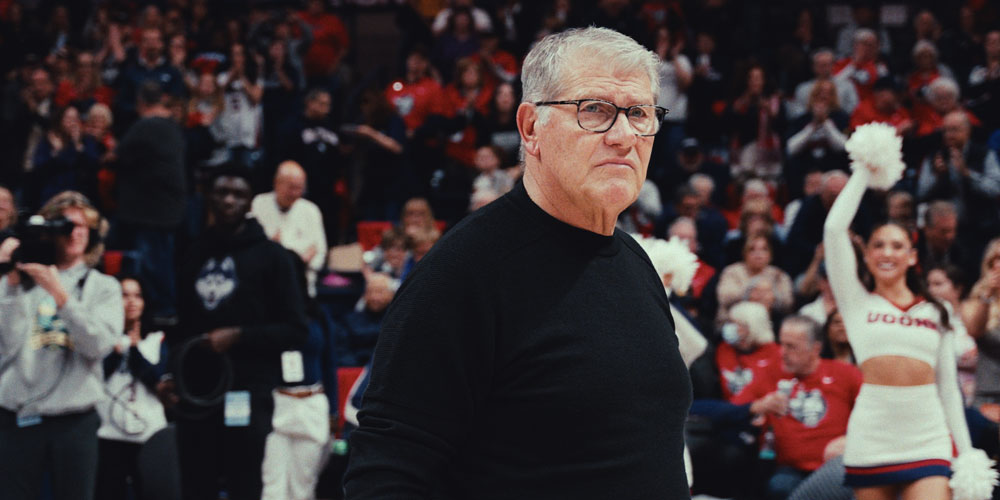
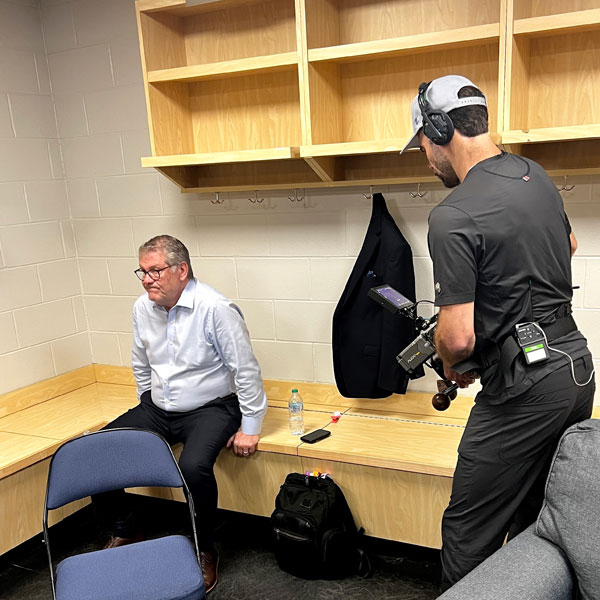
Recording gameplay used a similar methodology. “The rules were somewhat relaxed during the regular season. There was no frequency coordinator for a lot of the games primarily because there wasn’t a lot of media coverage. So I could mic up the coaches, staff, and plant mics even knowing it may not make the final cut. You’re never sure how things will play out so you want to be prepared to capture anything important,” he notes. Part of the workflow included a Zaxcom URX50 and an earpiece which had two audio sources being fed to it. “I gave Matt the setup and told him he could listen to my mix or if he wanted to listen to just Geno to press a button. He loved it.”
For the regular season, Nimkin would be the lone recordist during UConn’s home games, and when he couldn’t make an away game, a local mixer was tapped to record the action. “Collaboration and documentation are important. Also, being close and friendly with the camera department is helpful. We are all co-workers, and forming strong working relationships with the crew is an often overlooked component to maintaining consistency through a project as well as being fully accessible for any questions,” he notes. By season’s end, the Huskies went 37-3, winning the Big East and entered as a number two seed in the NCAA tournament. That’s when Nimkin had to adapt his workflow completely.
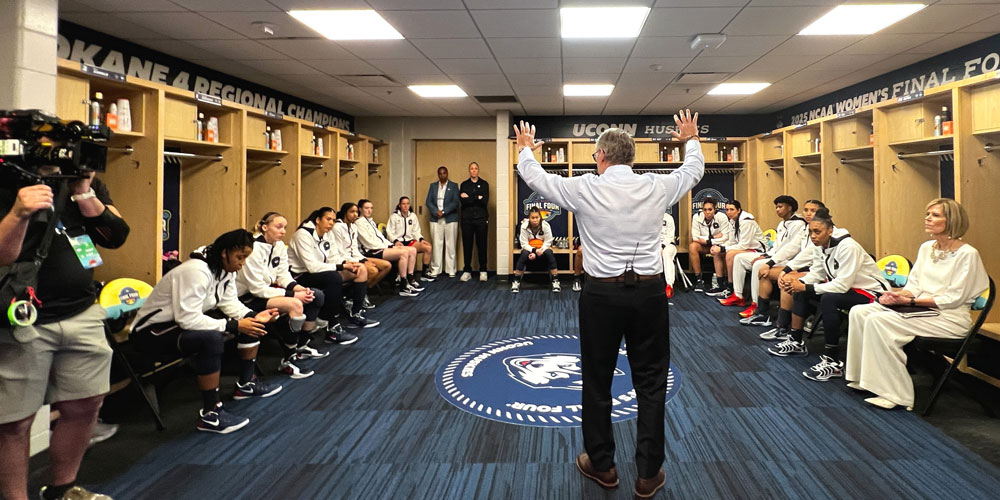
“The NCAA has rules that you can’t transmit during gameplay so Zaxcom was crucial in being able to record sound. I was able to mic the coaches for all the pre-game audio inside the locker room and with them in the tunnel leading out to the court. Then as soon as they stepped on the court, I would turn off the transmission. But since I was using Zaxcom ZMT4 transmitters, I was able to keep recording the audio onto the internal memory card. I couldn’t monitor the audio during the game but I had already been monitoring it for hours beforehand so I knew it was going to survive,” he says. “Then as soon as they came off the court for halftime, I would power up the transmission to check everything, and as I thought, the audio was fine.”
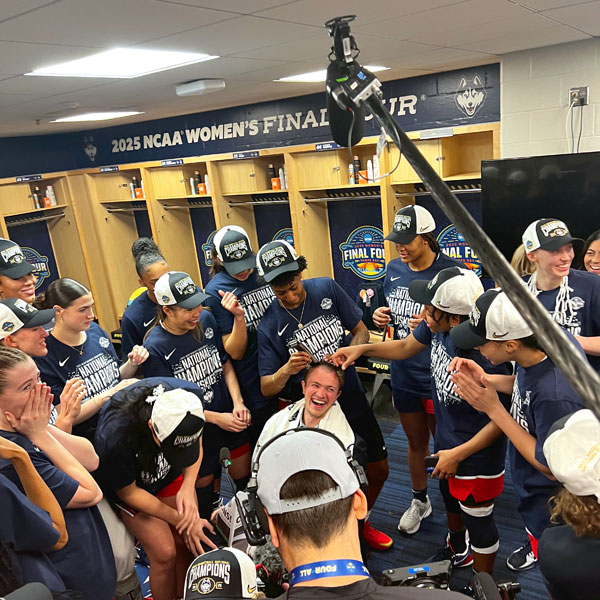
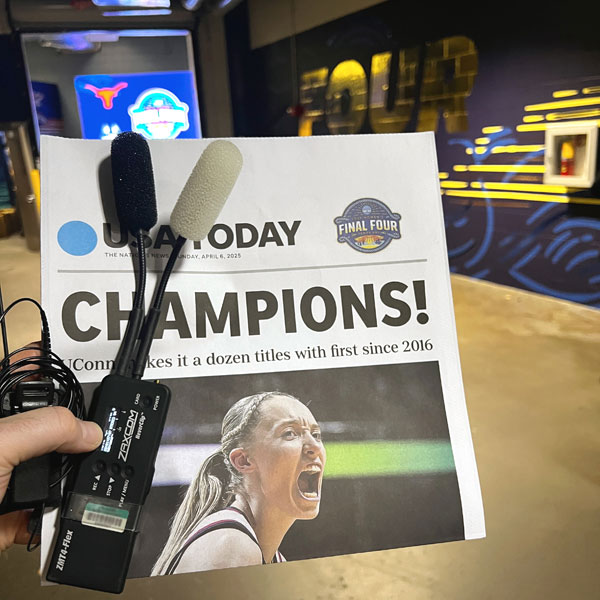
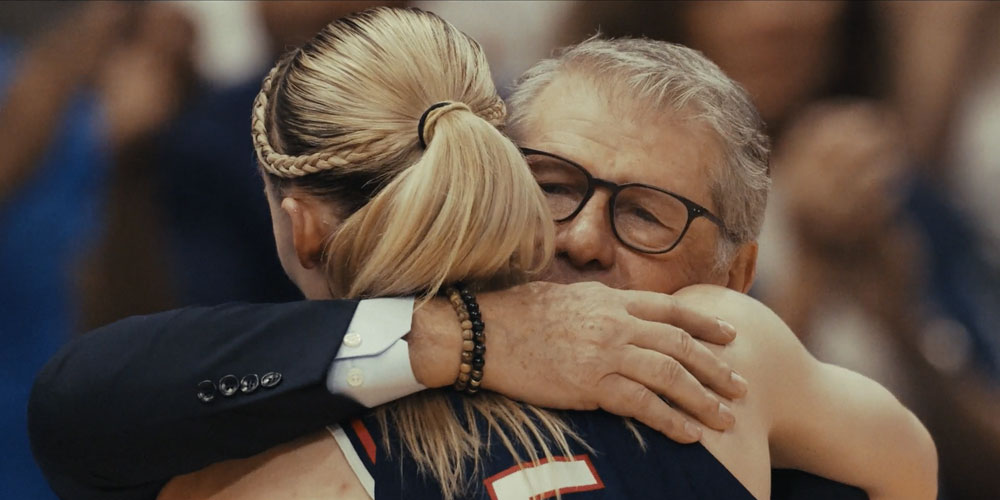
After six single-elimination games, the Huskies reached the finals against number one seed South Carolina Gamecocks. With any championship game there’s an increase in coverage, whether video or audio that could be licensed for the documentary but Nimkin didn’t take any chances. “We knew the gameplay was going to be fine but it is important for us to get the stuff that’s not being covered. Micing Geno was crucial,” he says. The choice provided some of the most heartwarming footage between Geno and Bueckers hugging at center court after the team’s championship victory.
“It’s a great moment,” he says. “I pulled that audio clip out immediately and sent it to Matt. And he was like, oh my, this is great. And because I flagged it, he could already think about where to place it in the story. Or use the footage as playback to ask questions during interviews.” When asked about what makes working in docs special he says, “The story is being created in front of you. And because I was an editor, I’m always thinking, does this section play into that or will the thing that happened before put a button on the whole scene. I’m always trying to pay attention to what’s happening. It’s not always realized in documentary that a sound mixer could be seeing how everything is playing out. I like to keep a big record of everything that’s happening, and if welcomed, talk to the director and say this thing might work well with this part, or this person said this thing. I’m not suggesting to him what to do, I’m just an extra set of ears thinking about this stuff.”
For Geno Auriemma, he continues to chase another championship. And Paige Bueckers? She was drafted number one overall in 2025 by the WNBA’s Dallas Wings before winning a gold medal with Team USA at the 2026 FIBA Women’s World Cup.
You can connect and catch up with Benjamin Nimkin through his website or via Sound Co-op.
The full team of location sound mixers included: Humberto Cabral, Jeremiah Gray, Galen Milender, Peter Miller, Joshua Morrison, Craig Rhee, Jason Rowland, Mike Ryan, Paul Schmitz, and Gerald Sebastian.