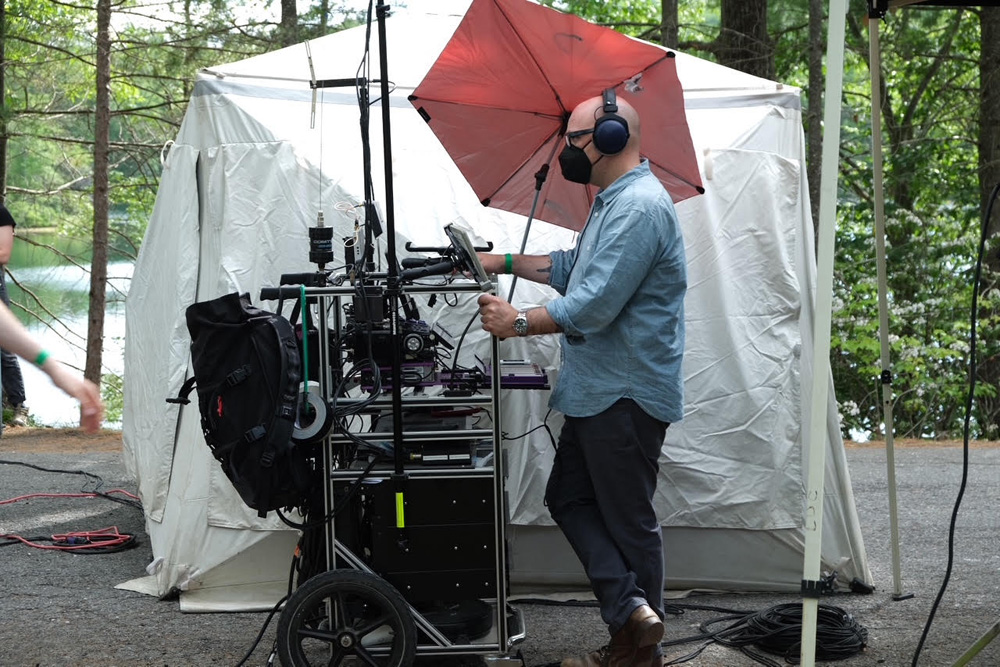
“I made the switch very slowly to Zaxcom,” says Adam Sanchez, whose multi-decade career has taken him from sound utility to boom operator and, ultimately, to fulltime production sound mixer.
“I was shooting a television show on a beach in Montauk and dealing with a number of inputs. Besides dialogue, we had a 12 piece band and I was getting clobbered by shore radio. I was using an analog system at the time and I set them aside and took out my Zaxcom wireless. They worked really well, and from then on, I started building a kit one piece at a time because, for me, there was a transition period to figure out how digital wireless really works. It’s very different from analog wireless.”
Today, Sanchez’s primary cart is stocked with Zaxcom Digital Recording Wireless, including two RX-12 paired with QRX212 module receivers, four TRXLA3.5 transmitters, two TRX743.5 plug-on transmitters, and ten ZMT4 transmitters. “My RX-12 is the backbone to my wireless setup, and in my opinion, it’s the best receiver Zaxcom has ever made. I rely on it and feel comfortable where I can do my job, make adjustments on the fly, and not have to think too hard about it.” He also incorporates Zaxcom’s VHF IFB audio system – combining a VTX1 and VRX1 – “with great results.” His main recorder is the Aaton Cantar X3 paired with a Cantaress control surface. It’s fully Dante-enabled, powered by a Meon LiFe, and outfitted with all the essentials to streamline efficiency — a tablet for scripts, laptop, dual monitors and antenna trees.
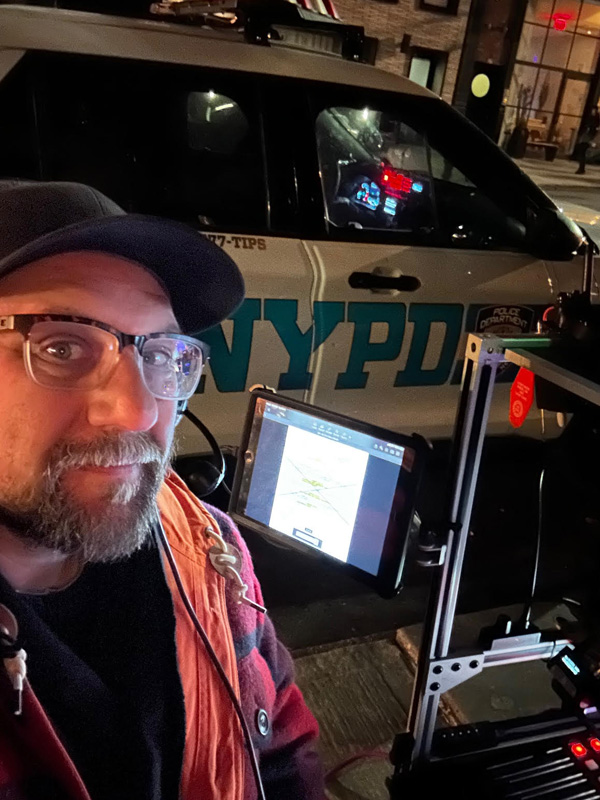
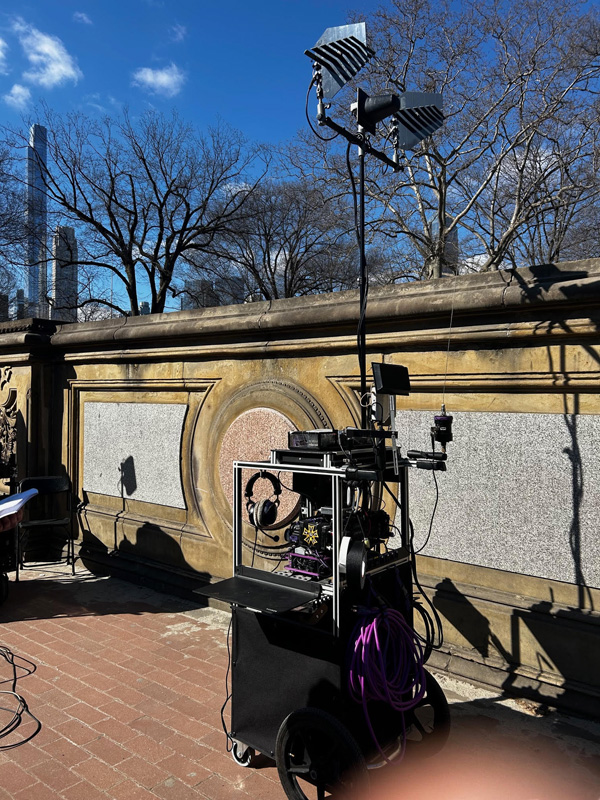
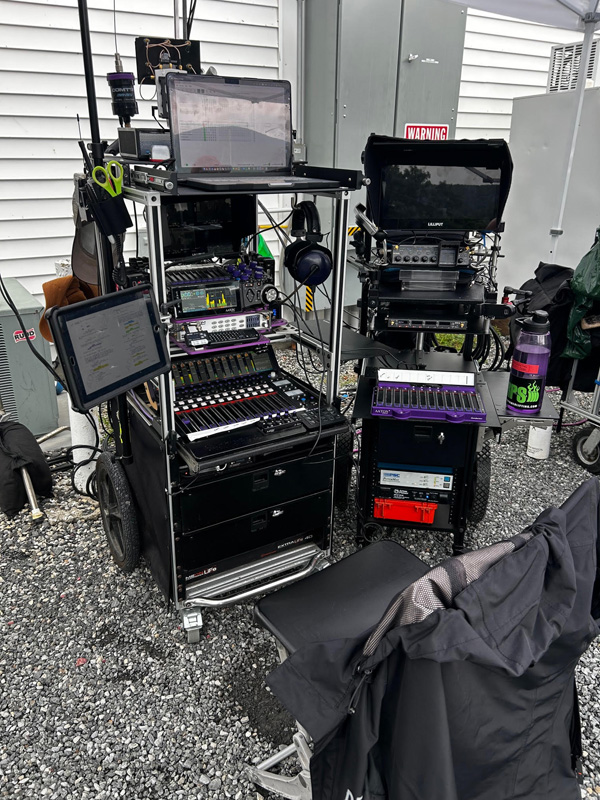
He also has a satellite cart – made in collaboration with Eric Ballew at Cannibal Industries – touting the Zaxcom Nova 2, Aria-8 control surface, and an RX-8D with MRX414s to receive wireless audio. Sanchez will swap out Aria-8 for an Aaton Cantarem 2 control surface depending on his needs. For bag days, he’ll use the Nova 2. “My current show [a new series yet to air] has me deploying 22 channels of wireless. Being able to network my Nova 2, my RX-8D, and my RX-12 to the recorder has been flawless, and has made the whole process painless.”
With reliable tech on his side, the New York-based mixer has recorded dozens of projects, including Orange is the New Black, The Americans, Ray Donovan, Godfather of Harlem, Mr. & Mrs. Smith, and both Dexter: New Blood and Dexter: Resurrection. He credits his success not only to a deep passion for the craft but to the connections he’s cultivated along the way. “I have learned that the most important thing in this business are the relationships you build with the people around you. With Dexter, I really get along with the whole team over there and when I got the call, I couldn’t say no,” he says. But Sanchez stresses he couldn’t do any of it without his family. “I love my job but without the support from my wife Ariell and my son Ulysses, I wouldn’t be where I am today. They truly are the most important part of my life.”
Recording the first season of Dexter: Resurrection, he tapped boom operators Brendan O’Brien and Allison Howe along with utility Karl Wasserman for the saga that picks up after New Blood and follows the infamous antihero (Michael C. Hall) desperately trying to find his missing son, Harrison (Jack Alcott), with new dangers threatening to expose him once again. Fan favorite David Zayas returns as Detective Angel Batista, joined by stars Uma Thurman and Peter Dinklage.

On typical production days, Sanchez deploys up to a dozen Zaxcom wireless. He says ZaxNet, a feature that remotely controls Zaxcom transmitters, is one of the most valuable tools in his kit. “With congested RF spectrum and the shifting nature of New York’s RF noise floor, being super agile is important. With performances that can go from a whisper to a scream, being able to adjust gain on the fly is indispensable,” he notes. ZaxNet has also aided wiring talent. “Sometimes we only get a short window to get a radio mic on our actors and being able to make adjustments remotely is indispensable. I don’t want to sleep on internal recording, however, it has saved my bacon often, and it provides me with a lot of security.” For wireless boom, he’ll deploy a ZMT4 modified with a Audio Workbench ZMTBT100 to extend runtime. On days where 100mW transmission power is needed, he’ll look to the Zaxcom TRX743.5.
A defining element of Sanchez’s mix lies in his approach to recording the voice of Dexter. “The trick on this show is that there are two dialogue versions of Dexter. There’s the Dexter who internalizes his monologue, which is his serial killer alter ego Dark Passenger. He talks down. He’s quiet and gravely. That dialogue is a mix between the wireless and the boom mic that’s a bit more radio mic heavy. Then the other version is when he talks up and a little bit louder is Dexter which we play on the boom. As he presents that version to the camera, I try really hard to keep the boom overhead and adjust the mono mix. It’s a subtle thing and tricky to get the phase correlation just right,” he explains.
Even with the understated tactic the mixer found support from the post sound team. “When I mix, it’s really for editorial and the dailies. It’s not necessarily what happens in the finished product, but I sat down with the supervising sound editor Lewis Goldstein after the first season was over and was pleased to discover that my intuition was correct. They were essentially mixing Dexter’s dialogue the same way which was pretty rewarding.”
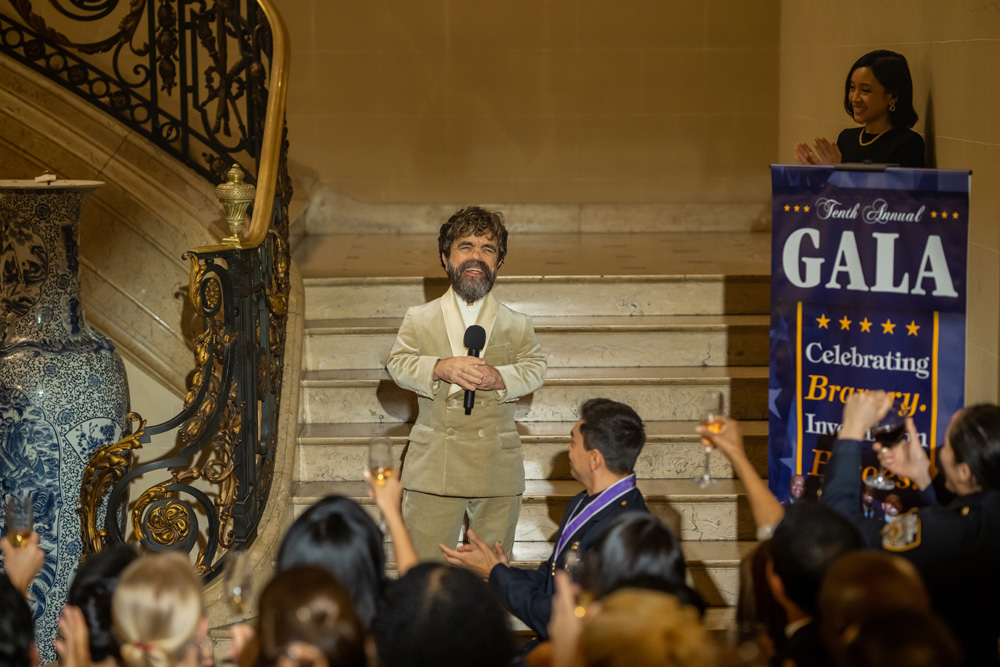
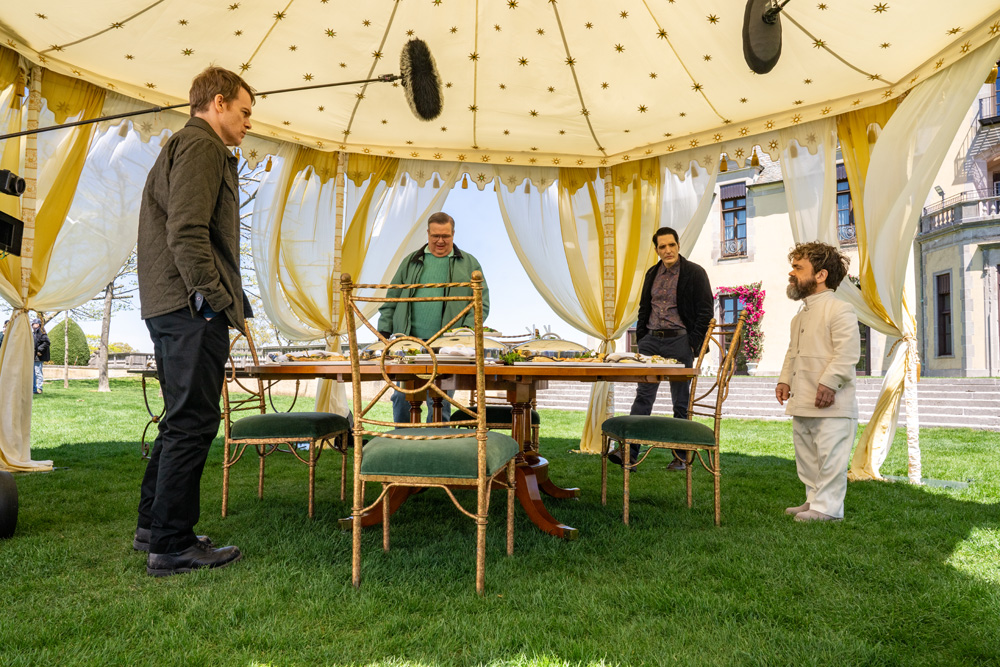
During the finale, Dinklage’s character, Leon Prater, hosts a lavish fundraising gala at his expansive mansion – a lively sequence Sanchez prepared for with extra care. “The gala itself was a big setup. They had big steadicam moves showing all the things happening, and then Peter’s character is up there on the stage. We had a lot of people in the crowd which was a challenge for the AD department. But recording it was fairly straightforward with some tricky lighting setups we had to navigate with our boom and tricky radio mic setups for actors in different wardrobes,” he says. “The biggest challenge was setting up enough talkback speakers in all the rooms so that the AD department could intelligently control the crowds without blowing everyone’s ears out.” Instead of a single PA speaker, Sanchez created a zone set up and mixed the talkback in each section.
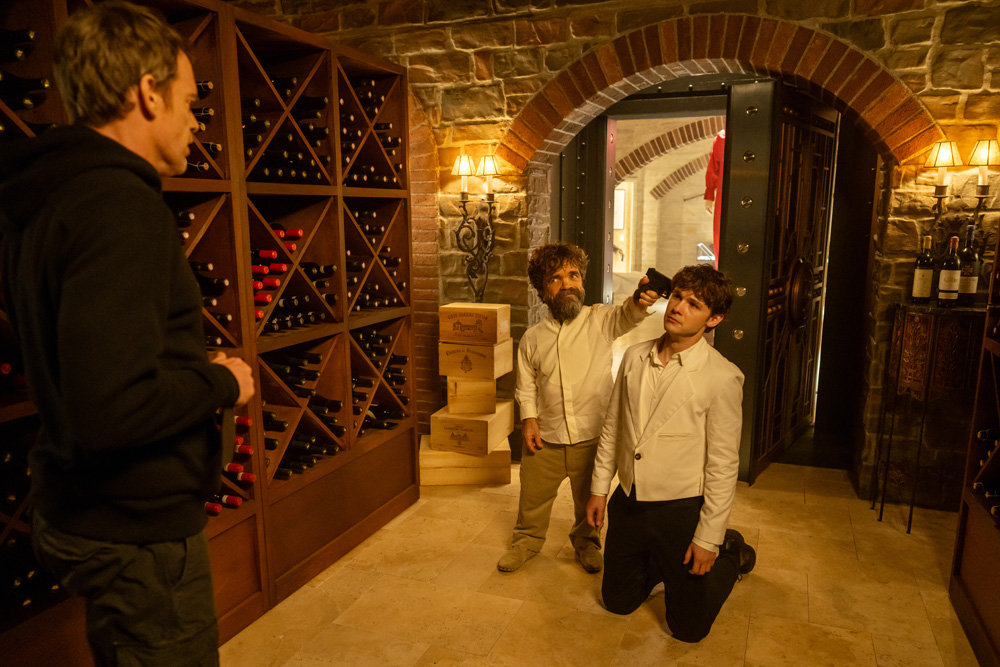
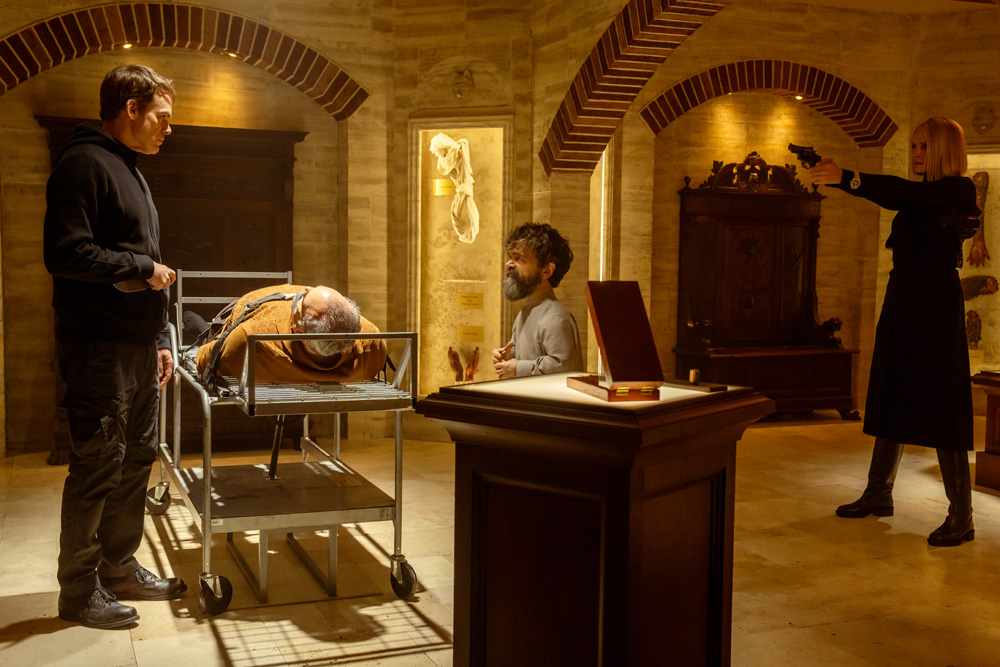
Another production challenge unfolded inside a vault where Dexter finds himself trapped. “The vault was super difficult. It was designed with hard top lights and a lot of mirrors,” he recalls. “I was reliant on my boom operators, Brendan O’Brien and Allison Howe, for really locking in and getting us those clean boom tracks that were the bread and butter of our workday. Their work in the vault was impressive. And it was our utility Karl Wasserman who made those radio mics work for us in the vault. My mix is secondary to those clean isolated tracks that they were bringing to the table.”
When asked what advice he would give to sound utility and boom operators today, he says, “As a mixer, I don’t want my crew to have to think too much about the technology. I want them to be thinking about what the actors are doing, what their intent is, what the director is doing, what their intent is, what serves the shot, edit, and the final product best. For a boom operator, it’s important to learn how to negotiate with the camera department in a collaborative sense to really understand what their intent is and what they’re really trying to accomplish. And as a utility, second booming is part of it, but getting in touch with the actors is important when wiring people. Having a connection with the human being and taking those moments to really gauge what their intent and needs are and then being able to facilitate the process is the best foot forward.”